The Complete Muslim Wedding Timeline: Nikah, Mehndi, Barat & Walima
A clear, event-by-event guide to how a Muslim wedding unfolds in the UK — from the mehndi night through the nikah, barat and walima, with what to expect at each stage.
Words by PlanMyNikah Team
29 June 2026
4 minute read
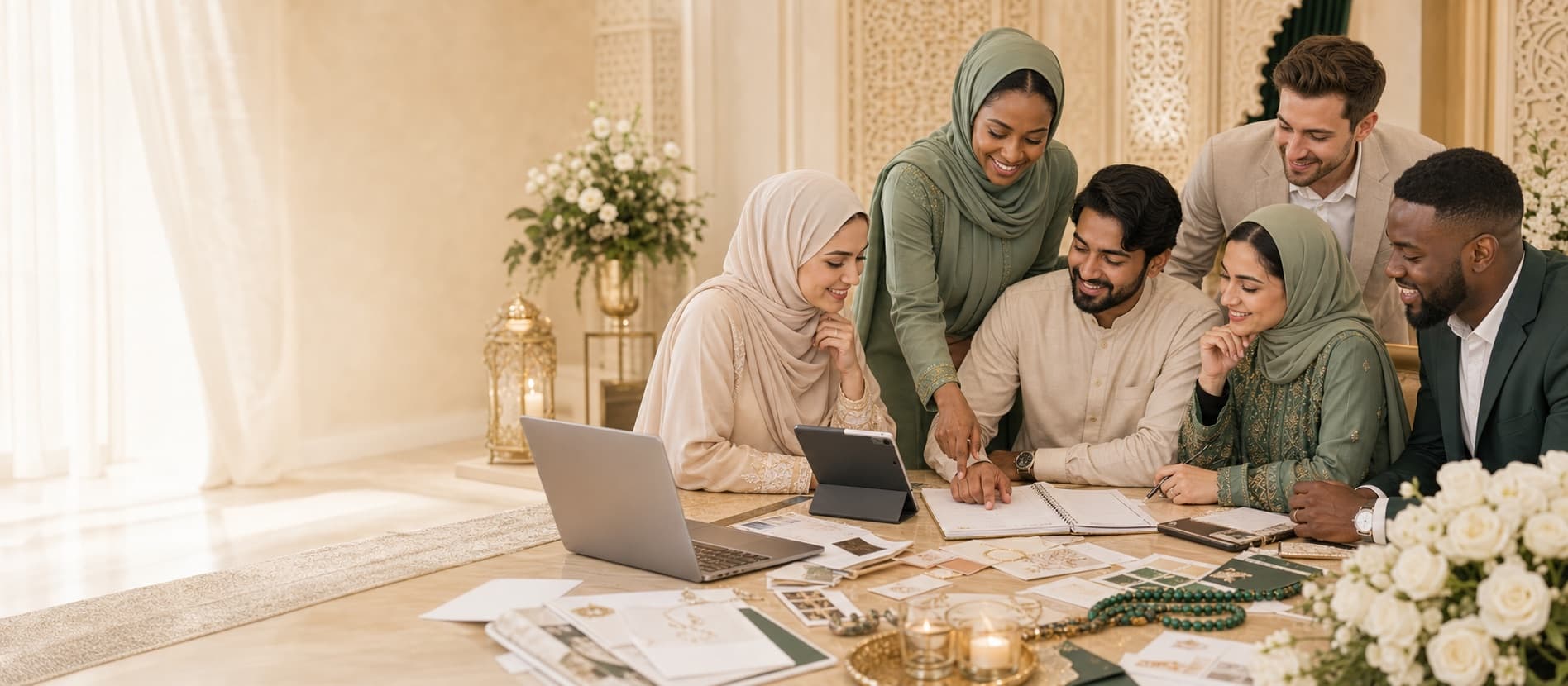
A Muslim wedding in the UK is not a single event — it is a series of celebrations, each with its own meaning, traditions and logistics. For couples planning their first wedding, or families navigating a multicultural mix of traditions, understanding how the events fit together makes everything easier to plan.
Here is how a typical South Asian Muslim wedding in the UK unfolds.
Overview: the four main events
| Event | Who hosts | When |
|---|---|---|
| Mehndi night | Bride's family | 1–3 days before the nikah |
| Nikah | Usually bride's or neutral venue | The wedding day |
| Barat | Bride's family | Same day as or after the nikah |
| Walima | Groom's family | Day after nikah (up to three days) |
Some families compress these into two days; others spread them across a week. There is no single right way.
Event 1: The Mehndi Night
The mehndi night is the pre-wedding celebration at which the bride's hands and feet are decorated with henna by a professional mehndi artist. It is held at the bride's family home or a hired venue, usually the evening before the nikah or barat.
It is typically a joyful, women-led gathering with music, dancing and food — though the format varies by family. Some keep it mixed; others women-only.
What to plan: venue or home space, mehndi artist, food, music/entertainment, guest invitations.
Read the full mehndi night guide →
Event 2: The Nikah
The nikah is the Islamic marriage contract — the core religious ceremony that makes two people husband and wife. It requires the bride and groom's consent, a wali (bride's guardian), two witnesses, and agreement on the mahr (gift to the bride).
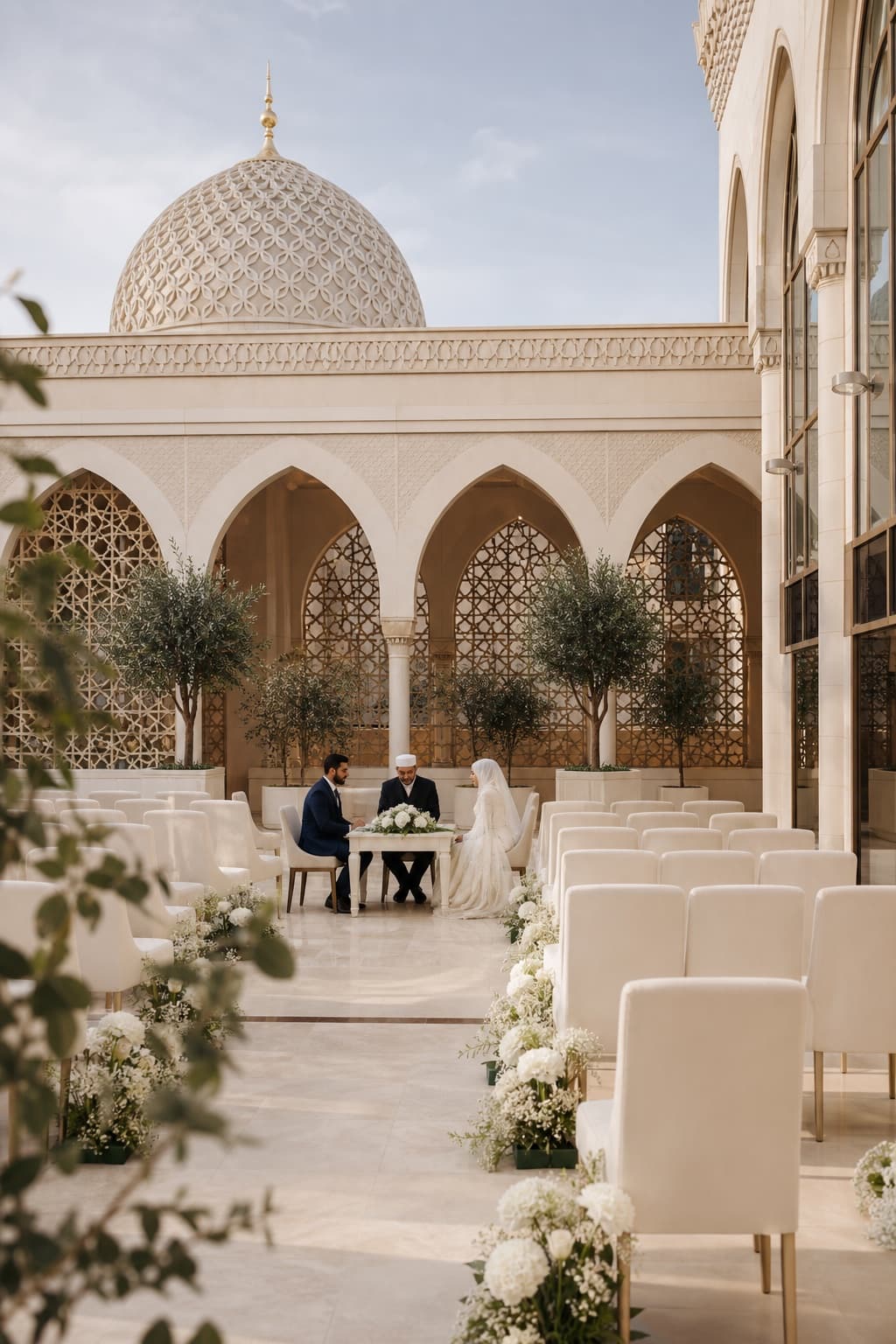
The ceremony is often led by an imam and may take place at a mosque, a wedding hall or at home. It can be private or attended by hundreds of guests.
Remember: a nikah alone is not legally recognised in England and Wales. You must also register your marriage civilly.
What to plan: imam, venue, witnesses, mahr, civil registration.
Important
Book your imam early — popular imams are in high demand, especially on Fridays and Saturdays.
Event 3: The Barat
The barat is the groom's procession arriving at the bride's venue, and the reception that follows. It is traditionally hosted by the bride's family and is often the largest, most formal event of the wedding — with a banquet, speeches and the rukhsati (the emotional farewell of the bride from her family).
The nikah sometimes takes place during the barat; other couples hold the nikah earlier the same day or on a separate occasion.
What to plan: venue, halal catering, photography, groom's transport, running order, rukhsati arrangements.
Event 4: The Walima
The walima is the Islamic feast hosted by the groom's family, usually the day after the nikah. It is a Sunnah of the Prophet ﷺ — a religious recommendation to celebrate and publicise the marriage with a meal shared among family and friends.
It can be as simple as a home dinner or as large as another full venue reception.
What to plan: venue or home, halal catering, guest list, du'a or recitation.
How to plan across all four events
The key planning decisions
- Which events will you hold? Not every family does all four. Many UK couples hold a mehndi, a combined nikah-and-barat reception, and a walima.
- How many days will the wedding span? One, two or three days is most common.
- Who hosts and funds what? Tradition holds that the bride's family hosts the mehndi and barat; the groom's family hosts the walima. Agree this early.
- What is the overall budget? Spread costs across events in the Budget Planner.
Tip
Start with the barat venue — it is usually the hardest to book, the most expensive, and the event that sets the date for everything else. Once that is confirmed, the other events arrange around it.
Muslim wedding planning timeline
- 9–12 months out: set dates, book barat venue, confirm budget split between families
- 6–9 months out: book halal caterers, photographers, imam
- 3–6 months out: book mehndi artist, arrange civil registration, send save-the-dates
- 1–3 months out: finalise guest lists, confirm walima venue and catering
- Final weeks: seating plans, day-of schedules, confirm all suppliers
Use the free Wedding Checklist on PlanMyNikah to manage tasks across every event.
The practical edit
Frequently asked questions
Do all Muslim weddings in the UK have all four events?
No. Many couples simplify. Some hold just a nikah and walima; others combine the barat into the nikah reception. There is no obligation to hold all four.
In what order do the events happen?
Typically: mehndi → nikah → barat → walima, though the nikah and barat are often on the same day, and the order can vary by family and tradition.
How do you balance two families' traditions?
Agree the schedule and budget structure early, ideally with both families present. Define who hosts and pays for what before bookings begin — most conflicts arise from unclear expectations, not genuine disagreements.
The letter from the editor
Wedding planning tips, straight to your inbox
Nikah checklists, budget advice and practical ideas, about twice a month. No spam.
Continue the edition
Related reading
Ummi Chowdhury: Bridal Artistry with an Editorial Eye
Meet Ummi Chowdhury, the London and Essex bridal hair and makeup artist with a London Runway editorial credit, a dedicated travelling team and bookings available across the UK and internationally.
PlanMyNikah vs Hitched for Muslim Weddings
An honest comparison of PlanMyNikah and Hitched for UK Muslim couples, covering vendor discovery, planning tools, faith-specific needs and which platform suits whom.
Questions to Ask a Muslim Wedding Venue Before Booking
Take this checklist to every venue viewing: halal catering, prayer space, segregation layouts, capacity, hidden costs, access, timings and contract terms.