What is a Barat? The Groom's Wedding Procession Explained
The barat is the groom's side arriving at the wedding venue — one of the most celebrated moments in a South Asian Muslim wedding. Here is what it involves and how to plan it.
Words by PlanMyNikah Team
29 June 2026
3 minute read
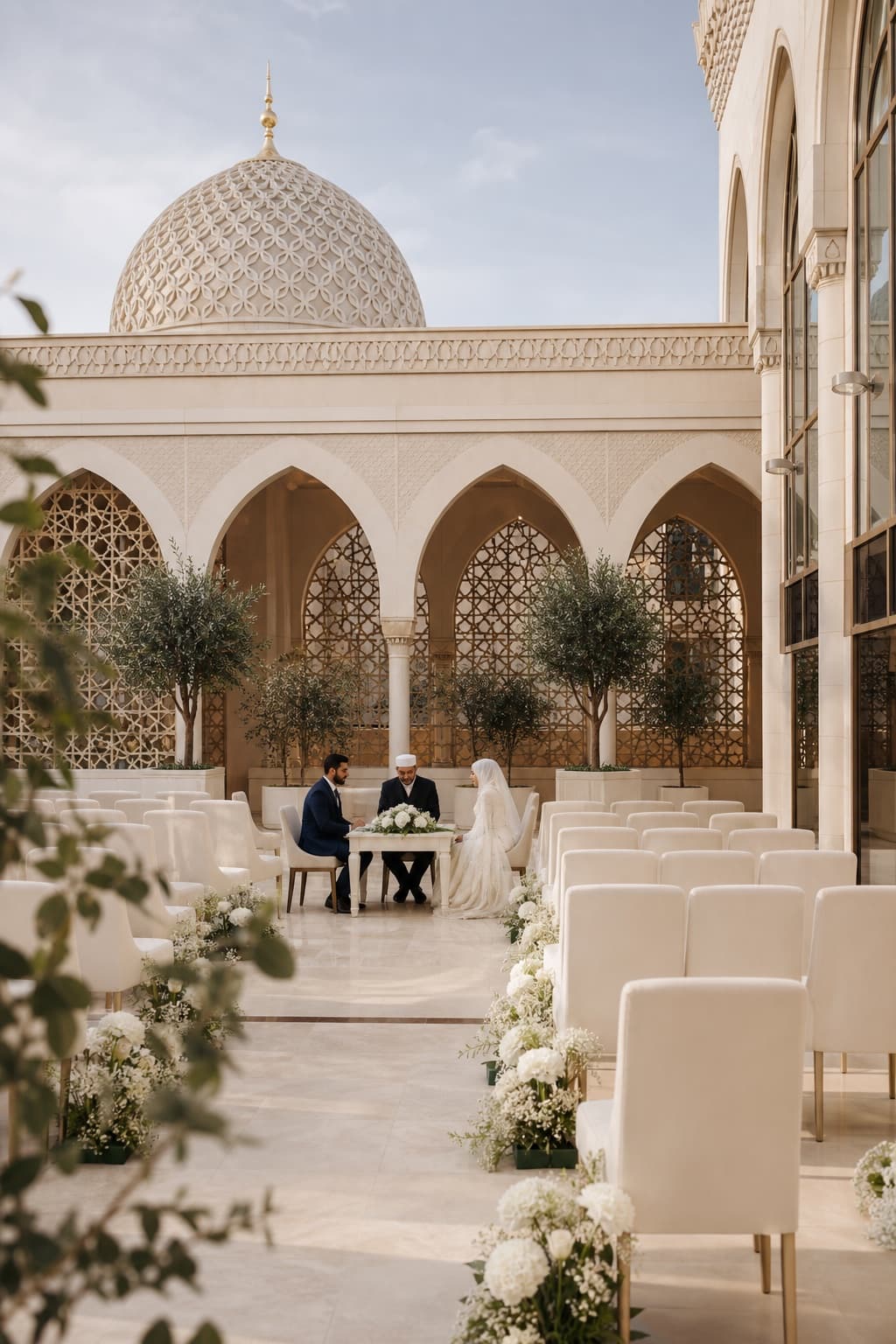
The barat is the groom's procession to the bride's venue — the moment the groom's family arrives to receive the bride and celebrate the union. It is one of the most festive parts of a South Asian Muslim wedding, and in many families it is the main reception event of the day.
What does barat mean?
Barat (also spelled baraat) is an Urdu/Hindi word for the groom's wedding party. It refers both to the procession itself and to the wedding reception that follows at the bride's venue.
What happens during a barat?
A barat typically unfolds in a sequence:
- The procession: The groom travels to the bride's venue, often in a decorated car, with his close male relatives and friends. In some families, there is dancing or a dhol drummer accompanying the arrival.
- The welcome: The bride's family greets the groom's party at the entrance with formal hospitality — often with rose petals, drinks or a sehra bandi (flower garland) ceremony.
- The nikah (if not already done): Many families hold the nikah ceremony during the barat, before the main reception begins.
- The reception: A banquet or buffet is served by the bride's family for the groom's guests. This is often the largest, most formal meal of the wedding celebrations.
- The rukhsati: The emotional send-off of the bride from her family home or venue. The bride departs with the groom's family, often accompanied by prayers and tears.
Note
Traditions vary by family and region. Some couples hold the nikah separately before the barat; others combine them. The order and customs are shaped by your family's heritage — Pakistani, Bangladeshi, Indian and other South Asian families all have their own variants.
Is the barat Islamic?
The barat is a cultural tradition, not a religious ceremony. The nikah is the Islamic obligation; the barat is the celebration surrounding it. As with other wedding customs, whether and how to celebrate it is a personal decision shaped by your family and your values.
Who attends the barat?
The barat traditionally includes the groom's family, relatives and close friends. The bride's family hosts them. Guest counts for the barat reception can range from a few dozen to several hundred — it is often the largest event of the wedding.
How to plan a barat
Planning the barat is primarily planning a large reception: venue, catering, decor, photography, the rukhsati moment, and managing two sets of family expectations.
Barat planning checklist
- Book a venue large enough for both the bride's and groom's guest lists
- Confirm halal catering and service style (buffet vs plated)
- Arrange photography and videography — the rukhsati is one of the most photographed moments
- Plan the groom's transport and procession style
- Confirm whether the nikah will be held at the barat or separately
- Coordinate the running order with both families
Use the Budget Planner to track costs across your mehndi, nikah, barat and walima, and browse halal caterers and venues on PlanMyNikah.
Tip
The rukhsati is an intensely emotional moment for both families. Brief your photographer so they are positioned well and ready — it is the moment that is hardest to recreate.
The practical edit
Frequently asked questions
Is the barat the same as the nikah?
No. The nikah is the Islamic marriage contract. The barat is the cultural reception and procession that often surrounds it. Some couples hold the nikah during the barat; others hold them on different days.
What is the difference between a barat and a walima?
The barat is hosted by the bride's family and is the main reception for the groom's party. The walima is hosted by the groom's family, usually the day after the nikah, and is the Sunnah celebration of the marriage. Both are often large events.
How much does a barat cost in the UK?
The barat is typically the most expensive single event in a Muslim wedding. Venue and catering for a large gathering can range from £5,000 to £30,000+ depending on guest count and location. Use the Budget Planner to plan across all your events.
The letter from the editor
Wedding planning tips, straight to your inbox
Nikah checklists, budget advice and practical ideas, about twice a month. No spam.
Continue the edition
Related reading
Ummi Chowdhury: Bridal Artistry with an Editorial Eye
Meet Ummi Chowdhury, the London and Essex bridal hair and makeup artist with a London Runway editorial credit, a dedicated travelling team and bookings available across the UK and internationally.
PlanMyNikah vs Hitched for Muslim Weddings
An honest comparison of PlanMyNikah and Hitched for UK Muslim couples, covering vendor discovery, planning tools, faith-specific needs and which platform suits whom.
Questions to Ask a Muslim Wedding Venue Before Booking
Take this checklist to every venue viewing: halal catering, prayer space, segregation layouts, capacity, hidden costs, access, timings and contract terms.