What is a Mehndi Night? Traditions, Meaning & How to Plan Yours
The mehndi night is one of the most joyful pre-wedding celebrations in South Asian Muslim culture. Here is what it involves, the traditions behind it, and how to plan one in the UK.
Words by PlanMyNikah Team
29 June 2026
3 minute read
Updated 28 July 2026
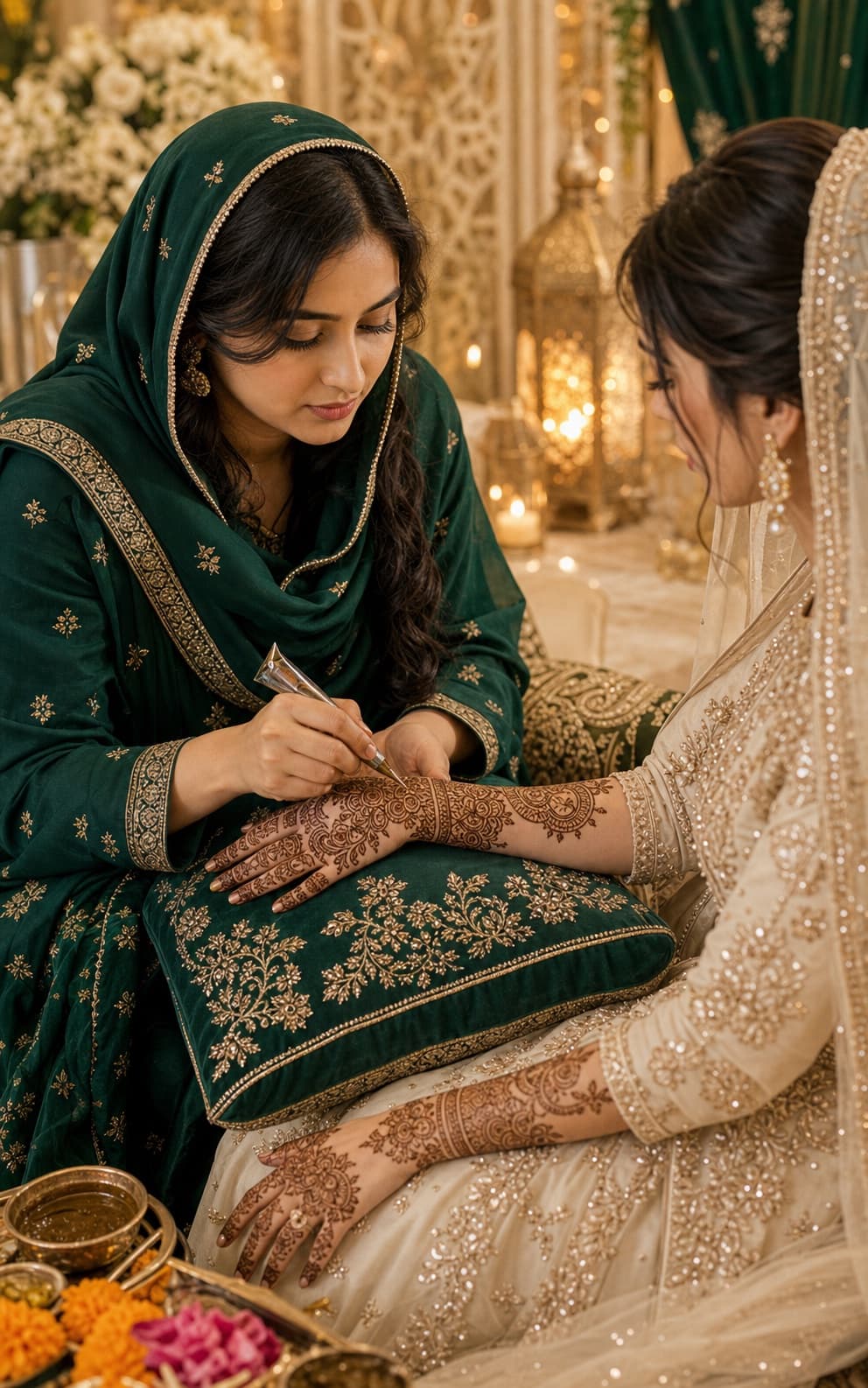
The mehndi night is the pre-wedding celebration where the bride's hands and feet are decorated with intricate henna designs. It is one of the most colourful and joyful events in a South Asian Muslim wedding, and for many families it is just as anticipated as the nikah itself.
What is the mehndi?
Mehndi is the Hindi/Urdu word for henna — a natural plant-based dye used to create temporary patterns on the skin. The mehndi ceremony is the event at which the henna is applied, usually the evening before the nikah or barat.
It is a tradition with deep roots across South Asian, Middle Eastern and North African cultures. For South Asian Muslim families in the UK (Pakistani, Bangladeshi, Indian), the mehndi night is typically a lively, women-led gathering filled with music, dancing and food.
What happens at a mehndi night?
Every family does it slightly differently, but most mehndi nights include:
- Henna application: A professional mehndi artist applies henna to the bride's hands and feet, often in elaborate floral or geometric patterns. The groom's hand may also receive a small application.
- Music and dancing: Traditional music, dhol (drum) performances and dancing are central to many mehndi nights. Some families prefer a more relaxed gathering.
- Food: Mehndi nights are usually centred around a shared meal or buffet.
- Games and performances: Friends and family sometimes prepare performances or games for the bride.
- Gifts: It is common for female relatives to bring gifts and blessings for the couple.
Note
Traditions vary significantly between families and communities. Pakistani, Bangladeshi and Indian families often have distinct customs. There is no single "correct" way to celebrate — your mehndi night should reflect your family's culture.
Is the mehndi Islamic?
Henna itself is considered permissible (halal) in Islam. Many hadith record that the Prophet ﷺ and his wives used henna, and it is commonly used at Muslim weddings across many cultures.
The mehndi night as a celebration is a cultural tradition rather than a religious requirement. Whether to include music and mixed-gender gatherings is a personal decision based on your family's values and the guidance of your scholars.
When is the mehndi held?
The mehndi night is almost always held the evening before the nikah or barat — typically one to three days before the wedding. It gives the henna time to develop into its darkest colour overnight.
Tip
Ask your mehndi artist how long the henna needs to set. Most recommend leaving the dried paste on for four to eight hours, then moisturising (without water) to deepen the colour. Avoid washing hands the morning after if you want maximum colour on the day.
How to plan a mehndi night in the UK
Planning a mehndi night involves booking a venue or arranging a home gathering, hiring a mehndi artist, organising food and entertainment, and deciding on the guest list (which for many families is women-only or mixed, depending on preference).
Mehndi planning checklist
- Decide the format: home gathering, hired hall or event space
- Book a professional mehndi artist well in advance (popular artists fill up fast)
- Plan the food — a caterer or a family-cooked spread
- Decide on music and entertainment
- Confirm the guest list and invitations
- Prepare a space or room for the bride to sit comfortably during application
Find mehndi artists and event spaces near you on PlanMyNikah.
How much does a mehndi night cost in the UK?
Costs vary widely. A professional mehndi artist for the bride typically costs £150–£500 depending on the complexity of the design and the artist's experience. Venue hire (if not at home) adds to this. Overall, UK mehndi nights range from a few hundred pounds for a home gathering to several thousand for a fully catered event with entertainment.
The practical edit
Frequently asked questions
How long does mehndi take to apply?
For a full bridal design (both hands and feet), expect two to five hours depending on the pattern complexity. Guests receiving simple designs add time too.
Who applies the mehndi?
Most brides book a professional mehndi artist. Family members may also apply simpler designs to guests.
Does the groom have a mehndi night?
Some grooms have a separate, smaller gathering (sometimes called a dholki or mehndi for the groom's side). Traditions differ by family.
What colour should the mehndi be on the wedding day?
Fresh henna starts orange and darkens to a deep burgundy-brown over 24–48 hours. The richness of the colour is often said to reflect the strength of the marriage.
The letter from the editor
Wedding planning tips, straight to your inbox
Nikah checklists, budget advice and practical ideas, about twice a month. No spam.
Continue the edition
Related reading
Ummi Chowdhury: Bridal Artistry with an Editorial Eye
Meet Ummi Chowdhury, the London and Essex bridal hair and makeup artist with a London Runway editorial credit, a dedicated travelling team and bookings available across the UK and internationally.
PlanMyNikah vs Hitched for Muslim Weddings
An honest comparison of PlanMyNikah and Hitched for UK Muslim couples, covering vendor discovery, planning tools, faith-specific needs and which platform suits whom.
Questions to Ask a Muslim Wedding Venue Before Booking
Take this checklist to every venue viewing: halal catering, prayer space, segregation layouts, capacity, hidden costs, access, timings and contract terms.