What is a Walima? The Islamic Wedding Feast Explained
The walima is the wedding feast hosted by the groom's family after the nikah. Learn what it means, what the hadith says, when it is held and how to plan one in the UK.
Words by Ilyas Amar
29 June 2026
7 minute read
Updated 21 October 2026
Sources, estimates and corrections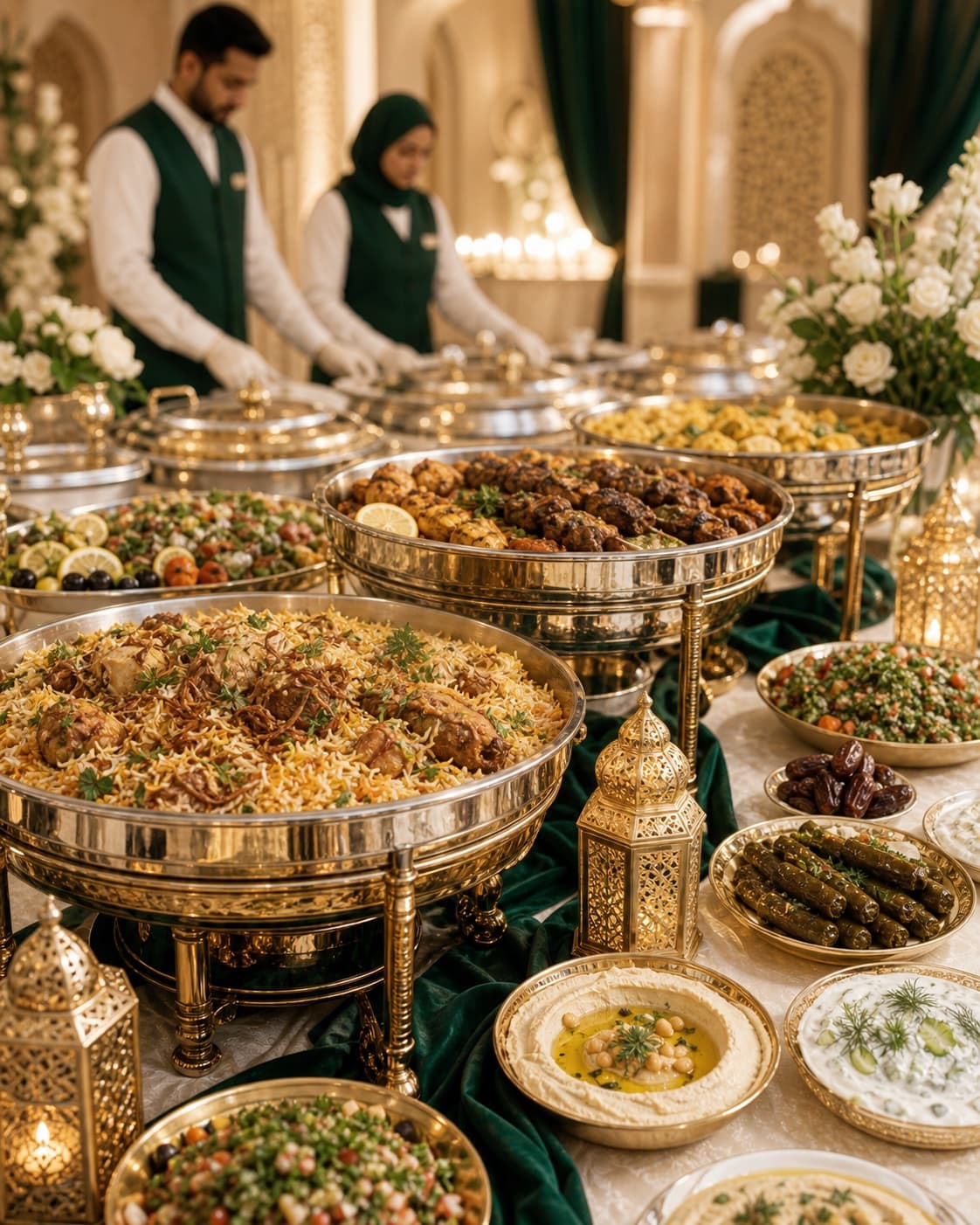
The walima is the Islamic wedding feast: a meal hosted after the nikah to celebrate and announce the marriage. It is traditionally hosted by the groom and his family. Many scholars describe it as a strongly recommended sunnah, and some regard it as obligatory. It can be a simple family dinner or a full reception.
What does walima mean?
In Islamic usage, walima refers to the meal hosted to celebrate a marriage. It is the feast that follows the nikah and invites family, friends and neighbours to share in the couple's joy. Unlike the barat, which is a cultural tradition, the walima has a clear basis in the hadith literature.
The word is often written walima (وليمة). In the UK you may also see it spelt walimah, and some families simply call it the wedding feast or the reception.
Is the walima obligatory?
Scholars differ on the exact ruling. Many describe the walima as a strongly recommended sunnah (sunnah muakkadah), and some consider it obligatory. The Prophet ﷺ told Abdur-Rahman ibn Awf to hold a wedding feast after his marriage, even if only with a single sheep. Ask your imam which view you follow.
That hadith is recorded in Sahih al-Bukhari 5167 and Sahih Muslim 1427a. In the Bukhari narration the Prophet ﷺ first asks about the mahr Abdur-Rahman gave, then tells him to give a banquet, even if with one sheep.
Note
This guide gives mainstream, general information and does not issue rulings. Practice varies between schools of thought and families, so speak to an imam or scholar you trust.
Do guests have to accept a walima invitation?
Hadith in Sahih al-Bukhari and Sahih Muslim urge people to accept an invitation to the wedding feast. In Bukhari it is reported that whoever refuses an invitation disobeys Allah and His Messenger. Scholars differ on how binding this is, so accept if you can, and if you cannot, decline respectfully and let the host know.
The same narration criticises a wedding feast to which only the rich are invited while the poor are not invited. See Sahih al-Bukhari 5177 and Sahih Muslim 1432a.
When should a walima be held?
Many families hold it the day after the nikah, and some hold it on the same day or within a few days because of practical constraints. There is no single fixed date that every school of thought and family agrees on. Choose a day that works for both families, and ask your imam if you follow a particular school.
Most families treat the walima as following the nikah, because it celebrates a marriage that has already taken place.
What happens at a walima?
The walima is, at its core, a meal hosted by the groom's family. In practice, UK Muslim families often celebrate it as a full reception, with a banquet or buffet, du'a and Quranic recitation led by an imam or elder, and a welcome for the bride into the groom's family.
- A banquet or buffet hosted by the groom's family
- Du'a and Quranic recitation, often led by an imam
- Welcoming of the bride into the groom's family
- Family and friends sharing in the joy of the marriage
The scale varies enormously, from an intimate family dinner to a large hall with hundreds of guests.
Tip
The walima does not have to be grand. The Prophet ﷺ told Abdur-Rahman to hold a feast even with a single sheep. Many scholars and families see a sincere, modest walima as more in keeping with the sunnah than an extravagant event that causes financial strain.
Who hosts and pays for the walima?
The walima is traditionally hosted and funded by the groom's family, which distinguishes it from the barat, traditionally hosted by the bride's family in many South Asian communities. Some families share costs between both sides. Agree who hosts and pays for what early, before bookings begin.
What is the difference between a nikah, a barat and a walima?
The nikah is the marriage contract, the barat is the groom's procession and reception, and the walima is the wedding feast. Only the nikah creates the marriage. The walima has a basis in the sunnah, while the barat is a cultural custom, and neither the barat nor the walima has legal effect on its own.
| Nikah | Barat | Walima | |
|---|---|---|---|
| What it is | The Islamic marriage contract | Groom's procession and the reception that follows | The wedding feast after the marriage |
| Religious standing | The essential religious act | A cultural custom, not a religious requirement | Strongly recommended sunnah; scholars differ on whether it is obligatory |
| Traditionally hosted by | Varies by family | Bride's family | Groom's family |
| Usual timing | The wedding day | Same day as, or after, the nikah | Commonly the day after the nikah |
| Legal effect in the UK | A legal marriage only if the civil requirements are also met | None on its own | None on its own |
For the full comparison, read nikah vs walima, or see how all four events fit together in the Muslim wedding timeline.
How much does a walima cost in the UK?
On PlanMyNikah's cost estimates a walima ranges from about £700 for a simple meal at home to about £18,000 for a hired hall with full catering. These are PlanMyNikah planning estimates, not survey data. Our cost guide shows the line items and explains how they were built.
How do you plan a walima in the UK?
Decide the scale, confirm halal catering, invite family and friends from both sides, arrange du'a or recitation and confirm the date. UK families hold the walima at home, in a restaurant or at a hired hall. For a step-by-step plan, use our UK walima planning checklist.
Walima planning checklist
- Decide the scale: home gathering, restaurant or hired venue
- Confirm halal catering: the food is the heart of the walima
- Invite family and friends from both sides
- Arrange for du'a or recitation to open the event
- Confirm the date (commonly the day after the nikah)
How do you check that the catering is halal?
Ask the caterer who certifies their halal food and ask to see the certificate. The Halal Monitoring Committee describes itself as a charity that monitors, inspects and certifies halal products, and the Food Standards Agency says there is no legal requirement to label meat by slaughter method. Muslims differ on some halal questions, so ask for the caterer's policy in writing.
Read about the Halal Monitoring Committee and the FSA's food fact check on slaughter and labelling. On PlanMyNikah, halal evidence is a separate review from listing approval, and our How We Verify page explains what each badge means.
Browse halal caterers and venues for the walima on PlanMyNikah, and track the costs alongside your other events in the Budget Planner.
Which sources does this guide use?
This guide draws on the hadith collections of Sahih al-Bukhari and Sahih Muslim for the religious background, and on official and charity sources for the halal catering advice. Where scholars differ, we say so. Check current details with your imam and caterer.
- Sahih al-Bukhari 5167 and Sahih Muslim 1427a for the instruction to hold a wedding feast, even with one sheep.
- Sahih al-Bukhari 5177 and Sahih Muslim 1432a for accepting the invitation and not inviting only the rich.
- Halal Monitoring Committee: About us for what HMC says it monitors, inspects and certifies.
- Food Standards Agency: Food fact check on animal welfare in abattoirs and slaughterhouses (3 June 2026) for labelling and halal slaughter.
The practical edit
Frequently asked questions
Does the walima have to be a large event?
No. The Prophet ﷺ told Abdur-Rahman ibn Awf to hold a wedding feast even with a single sheep. What matters is the sincere intention and the invitation of family and friends to share in the joy.
Can the walima be held on the same day as the nikah?
Many families do, and practice varies. The walima celebrates the marriage, so it follows the nikah, and the commonly preferred day is the day after. Ask your imam if you follow a particular school of thought.
Who should be invited to the walima?
Family, friends and neighbours who would benefit from attending. The hadith in Sahih al-Bukhari criticises a wedding feast to which only the rich are invited and the poor are left out, so the invitation should not be restricted to the wealthy.
Is it permissible to decline a walima invitation?
The hadith urges accepting the invitation, and scholars differ on how binding that is. If you cannot attend, decline respectfully and let the host know. If you have a genuine reason you cannot attend, such as illness, explain kindly to the host, and ask your imam if you are unsure.
The letter from the editor
Wedding planning tips, straight to your inbox
Nikah checklists, budget advice and practical ideas, about twice a month. No spam.
Continue the edition
Related reading
Ummi Chowdhury: Bridal Artistry with an Editorial Eye
Meet Ummi Chowdhury, the London and Essex bridal hair and makeup artist with a London Runway editorial credit, a dedicated travelling team and bookings available across the UK and internationally.
PlanMyNikah vs Hitched for Muslim Weddings
A dated, fair comparison of PlanMyNikah and Hitched for UK Muslim couples: vendor directory scale, free planning tools, faith-specific details and which suits whom.
Questions to Ask a Muslim Wedding Venue Before Booking
Take this checklist to every venue viewing: halal catering, prayer space, segregation layouts, capacity, hidden costs, access, timings and contract terms.