What Is Mahr? A Practical Guide for UK Muslim Couples
Mahr is the marriage gift the groom agrees to give the bride as part of the nikah. Learn what it can include, who decides it and how to record it clearly.
Words by Ilyas Amar
12 July 2026
6 minute read
Updated 21 October 2026
Sources, estimates and corrections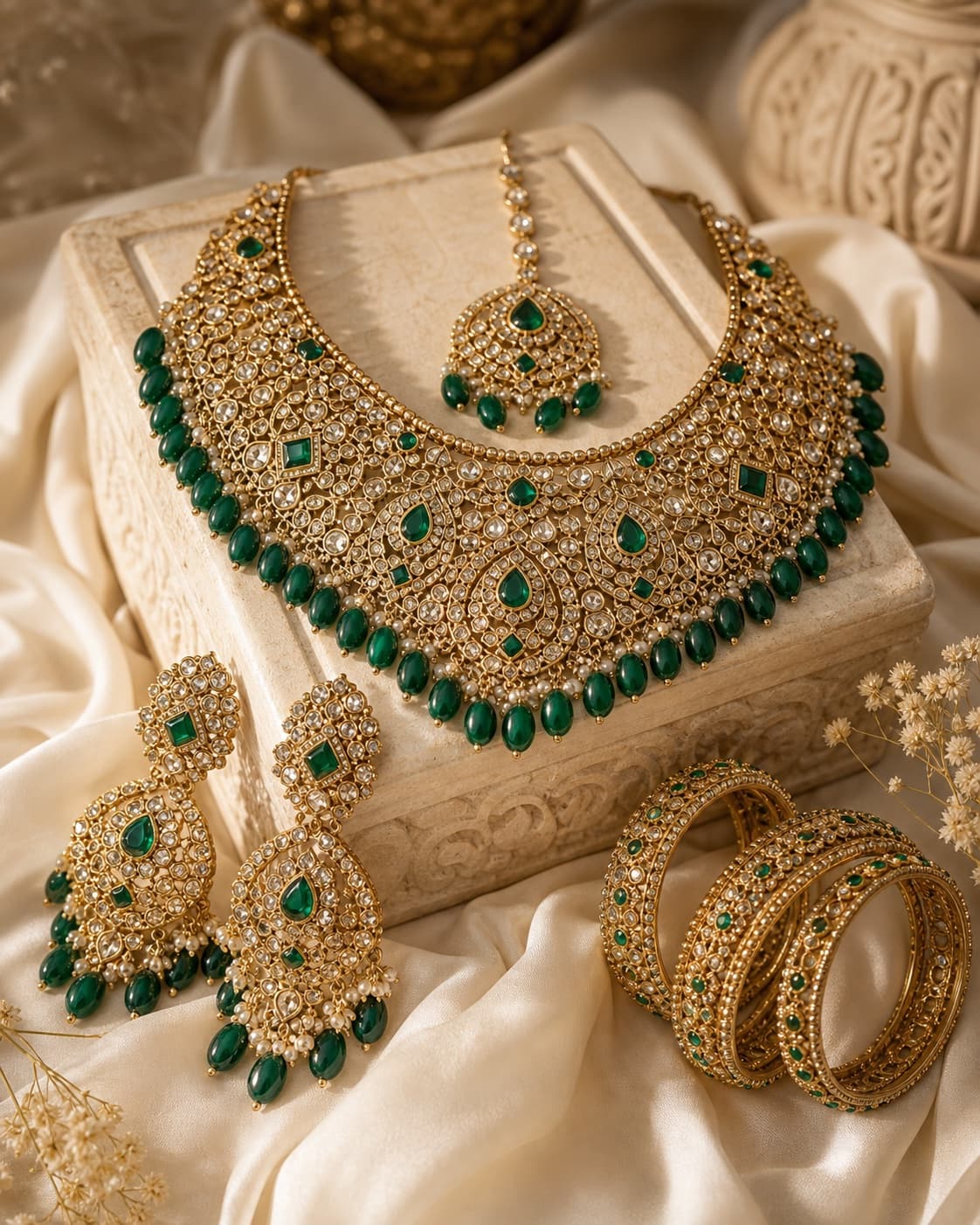
Mahr is the marriage gift the groom agrees to give the bride as part of the nikah. It belongs to her alone and can be money, gold, property or another lawful benefit with a clear value. The amount, timing and payment terms should be freely agreed and written into the nikah contract.
What does mahr mean in Islam?
Mahr, also called sadaq, is a right of the bride and an obligation created by the marriage contract. The Quran tells husbands to give women their dowries graciously (4:4). It is not a payment to the bride's parents, a purchase price or the same thing as wedding gifts exchanged between families.
Qur'an 4:4 tells those who marry to give women their due dowries graciously. Qur'an 4:24 says to give the women you have consummated marriage with their due dowries, and that it is permissible to be mutually gracious about the set dowry. Translations often say "dowry", but mahr is given by the groom to the bride and belongs to her.
Who decides the mahr?
The bride and groom agree the mahr through free discussion, and the bride's consent matters because the mahr belongs to her. Families and an imam can help. A useful agreement balances generosity with what the groom can genuinely provide, because an amount that looks impressive but cannot be paid causes avoidable conflict.
Because Islamic schools of law differ on some details, ask a trusted imam or qualified scholar about your circumstances. This guide gives general information and does not issue rulings.
How much should mahr be?
Islamic texts mention both large and small mahr, and schools of thought differ on whether there is a minimum, so there is no single correct figure. The couple agree an amount that is meaningful and affordable. Ask a trusted imam about the view your family follows, and write the amount down clearly.
The Quran refers to a husband having given his wife "a stack of gold" as a dowry and says none of it may be taken back (4:20). In Sahih al-Bukhari 5167, Abdur-Rahman ibn Awf says he gave gold equal to the weight of a date stone. In Sahih al-Bukhari 5087, the Prophet ﷺ tells a man who has little to look for something to give, even an iron ring.
What can be given as mahr?
Common forms are a cash amount, gold or jewellery described by weight and purity, property or another clearly identified asset, an immediate portion plus a deferred amount, or another lawful benefit both sides accept. Avoid vague wording such as "a gold set". Record the currency, asset, value or quantity so both people understand the same promise.
| Form | What to write down | Practical point |
|---|---|---|
| Cash | The amount and currency | Say whether it is paid by transfer or in person, and keep proof |
| Gold or jewellery | The weight, purity and a description of each item | The price of gold changes, so say whether the promise is the items or a cash value |
| Property or another asset | A clear description that identifies it | Ask a solicitor if the asset has to be transferred or registered |
| Part now, part later | Each amount and the date the later part is due | Do not rely on family memory for the due date |
When is mahr paid?
Mahr can be prompt, paid at or soon after the nikah, deferred, due at an agreed later time, or split between the two. If any part is deferred, write down exactly when it becomes due rather than relying on family memory. Keep proof of any payment or transfer with the signed contract.
| Type | When it is due | What to record |
|---|---|---|
| Prompt | At or soon after the nikah | The amount and the date it was paid, with proof |
| Deferred | At an agreed later date or event | The exact due date or trigger |
| Split | Part prompt and part deferred | Both amounts and when each is due |
That practical record is helpful even when everyone trusts one another.
Is mahr legally enforceable in the UK?
It depends on the wording, the circumstances and the law that applies. A nikah contract is not automatically treated like a civil marriage or an ordinary commercial contract, and legal rights attached to marriage depend on the marriage being legally recognised. This is not legal advice. If a substantial amount matters, ask a UK family-law solicitor before signing.
In England and Wales, GOV.UK lists the legal rights and responsibilities that come with marriage, including inheritance and certain tax benefits, and says that "common law marriages" do not exist. See GOV.UK: Your legal rights and responsibilities. For when a nikah is also a legal marriage, read Is a nikah legally recognised in the UK?.
How should couples record mahr clearly?
Before the nikah, agree the exact amount or asset, what is paid immediately, what is deferred and its due date or trigger, the currency, and whether inflation or the price of an asset changes the promise. Write it into the contract and give both spouses a signed copy. Keep proof of payment with the paperwork.
- the exact amount or asset;
- what is paid immediately;
- what is deferred and its due date or trigger;
- the currency, and whether inflation or the price of an asset changes the promise;
- signatures and a copy for both spouses.
Add "agree and document mahr" to the free Wedding Checklist, and read What is a nikah? for the rest of the ceremony.
Is mahr the same as a dowry or a wedding gift?
No. Mahr is given by the groom to the bride and belongs to her. A dowry in the cultural sense, or gifts and payments exchanged between families, is a separate matter. English translations of the Quran often use the word dowry for mahr, which is one reason the terms get mixed up in everyday conversation.
For presents that guests bring, read Muslim wedding gifts: what to give at a nikah or walima. Mahr is agreed between the couple and is not a vendor cost, so keep it separate from your event budget; the cost guide does the same.
Which sources does this guide use?
This guide uses the Quran and Sahih al-Bukhari for the religious background and GOV.UK for the legal rights that come with marriage in England and Wales. Where schools of thought differ, we say so and do not issue rulings. Check details with your imam and, for enforceability, a solicitor. We opened every source below on 21 October 2026.
- Qur'an 4:4 and Qur'an 4:24 for the instruction to give women their dowries, and Qur'an 4:20 for the reference to a stack of gold given as a dowry.
- Sahih al-Bukhari 5167 for the gold the Prophet's companion gave, and Sahih al-Bukhari 5087 for the instruction to look for something to give, even an iron ring.
- GOV.UK: Your legal rights and responsibilities for the legal consequences of marriage and the absence of common law marriage.
The practical edit
Frequently asked questions
Is mahr compulsory in a nikah?
Mahr is a right of the bride within the Islamic marriage. Couples should agree and record it clearly, while asking a trusted scholar about any school-specific detail, such as whether a minimum applies.
Can the bride choose her mahr?
The mahr must be agreed with her free consent. She may propose an amount or asset and negotiate it with the groom, and families or an imam can help them reach an agreement both can honour.
Can mahr be paid later?
Yes, all or part can be deferred if both people agree. The contract should state exactly what is owed and when it becomes due, so that neither spouse has to rely on memory later.
Is mahr the same as a dowry paid by the bride's family?
No. Mahr is given by the groom to the bride and belongs to her. It is separate from cultural gifts or payments between families, even though some English translations of the Quran use the word dowry for it.
Is mahr part of the wedding budget?
Mahr is a gift from the groom to the bride, agreed between the couple, so it is not a vendor cost. Keep it separate from your event budget, and see the cost guide for the events and vendors you do need to budget for.
The letter from the editor
Wedding planning tips, straight to your inbox
Nikah checklists, budget advice and practical ideas, about twice a month. No spam.
Continue the edition
Related reading
Ummi Chowdhury: Bridal Artistry with an Editorial Eye
Meet Ummi Chowdhury, the London and Essex bridal hair and makeup artist with a London Runway editorial credit, a dedicated travelling team and bookings available across the UK and internationally.
PlanMyNikah vs Hitched for Muslim Weddings
A dated, fair comparison of PlanMyNikah and Hitched for UK Muslim couples: vendor directory scale, free planning tools, faith-specific details and which suits whom.
Questions to Ask a Muslim Wedding Venue Before Booking
Take this checklist to every venue viewing: halal catering, prayer space, segregation layouts, capacity, hidden costs, access, timings and contract terms.