How to Plan Your Nikah: A Step-by-Step Timeline
The order to decide things in when planning a nikah in the UK, who to involve and when, and how to adjust if you have 12 months, 3 months or about 8 weeks.
Words by Ilyas Amar
17 June 2026
7 minute read
Updated 21 October 2026
Sources, estimates and corrections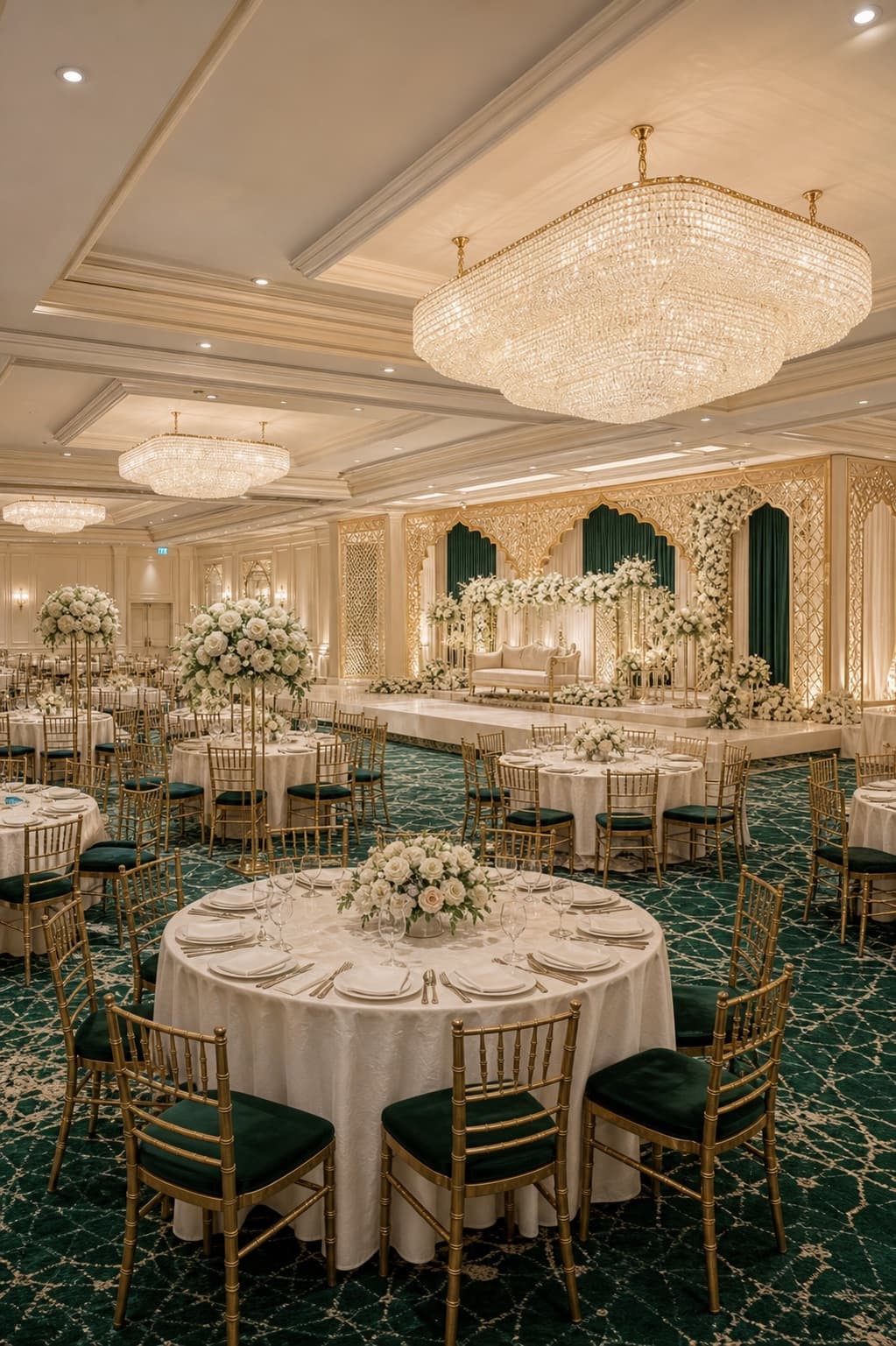
To plan a nikah step by step, decide in this order: the kind of nikah and where it will be held, the date and imam, the budget and guest list, the bookings, the legal notice, then invitations and final confirmations. This guide explains why that order works and how to adjust it if you have 12 months, 6 months or only a few weeks. For a tick-box version, use the nikah planning checklist. For all four wedding events, read the Muslim wedding timeline.
How do you plan a nikah step by step?
Plan a nikah in seven steps, each one unlocking the next: choose the kind of nikah, fix the date and imam, set the budget and guest count, book the venue and vendors, give legal notice if you want a legal marriage, send invitations, then confirm everything. The table shows what each step decides.
| Step | What you decide | Why it comes here |
|---|---|---|
| 1. The kind of nikah | Mosque, hall or home; legal marriage or religious only; who attends | GOV.UK says the venue must be decided before you give notice |
| 2. Date and imam | Date, imam, wali and witnesses | Every later booking works around these |
| 3. Money and people | Total budget and a rough guest count | Venue size and catering are priced from these |
| 4. Bookings | Venue, halal catering, photography, outfits | They depend on the date and the numbers |
| 5. Legal notice | Appointment at your register office | At least 29 days before the ceremony |
| 6. Invitations | Save-the-dates, invitations, RSVPs, seating | They need a confirmed date, venue and guest list |
| 7. Final week | Final headcount, running order, day-of roles | They need real numbers |
What should you decide first when planning a nikah?
Decide what kind of nikah you are planning: where it will be held, whether it will also be a legal marriage, and roughly who will attend. These choices drive the budget, the venue and the paperwork. GOV.UK says you must decide the venue before you give notice, so the venue comes before the legal steps.
Talk to both families before you talk to vendors. Agree who is hosting, who is contributing and what the families expect, then write it down. Our guide to choosing a nikah venue covers mosques, halls and homes, and the cost guide shows what each part of a Muslim wedding can cost.
Who needs to be involved in planning a nikah, and when?
Involve the people who control your date first: your imam, your wali and your witnesses, plus the venue. Bring in the register office when you are ready to give notice, and vendors once the date and numbers are set. The table lists who to contact and when. Roles for the wali and witnesses differ, so ask your imam.
| Who | When to involve them | What to settle |
|---|---|---|
| Imam | As soon as you have a rough date | Availability, the mahr, witnesses and any documents he needs |
| Wali and witnesses | By about 6 months out | Availability. Views on their roles differ between schools of thought, so ask your imam |
| Venue (mosque or hall) | As soon as the date and numbers are rough | Whether it is registered for marriages and has an authorised person |
| Register office | When the venue is decided | A notice appointment, at least 29 days before the ceremony |
| Caterer and photographer | After the date and numbers are set | A written quote with inclusions |
| Family | From the start | Who hosts, who contributes and who does which job |
The mahr is a gift from the groom to the bride, and the Quran tells believers to give women their dowries graciously (Quran 4:4). The amount, the timing and what counts as the mahr are for you, your families and your imam to agree. Read what is mahr for more.
How long do you need to plan a nikah?
We suggest 9 to 12 months for a full celebration, but a nikah can be planned in less time with fewer choices. The legal floor in England and Wales is giving notice at least 29 days before the ceremony. The table shows what to prioritise with 12 months, 6 months, 3 months or about 8 weeks.
| Time you have | Do first | What to expect |
|---|---|---|
| 12 months or more | Date, imam and venue, then vendors at your own pace | The widest choice of dates and vendors |
| About 6 months | Imam and venue this month, then caterer and photographer | Fewer options for popular dates |
| About 3 months | Imam, venue and caterer in the first fortnight, and book your notice appointment | You may need to be flexible on the day of the week and the guest numbers |
| About 8 weeks | A simple nikah: imam, a venue you can see this week, a caterer or family catering, and notice booked now | Limited choice and simple decor |
These timings are PlanMyNikah suggestions, not rules, and availability varies by date and area. The only fixed deadline is the legal one, so book the notice appointment early if you want a legal marriage.
When do you give notice of marriage in England and Wales?
GOV.UK says you must give notice at least 29 days before your ceremony, and hold the ceremony within 12 months of giving notice. You make an appointment at your local register office. If one of you is from outside the UK, different rules may apply, so check early. Scotland and Northern Ireland have separate rules.
You must also have decided your ceremony venue before you give notice. Check the full list of documents on GOV.UK's give notice page. Our guide Is a nikah legally recognised in the UK? explains each nation's rules and what happens if the civil steps are skipped.
Does the venue change the legal steps?
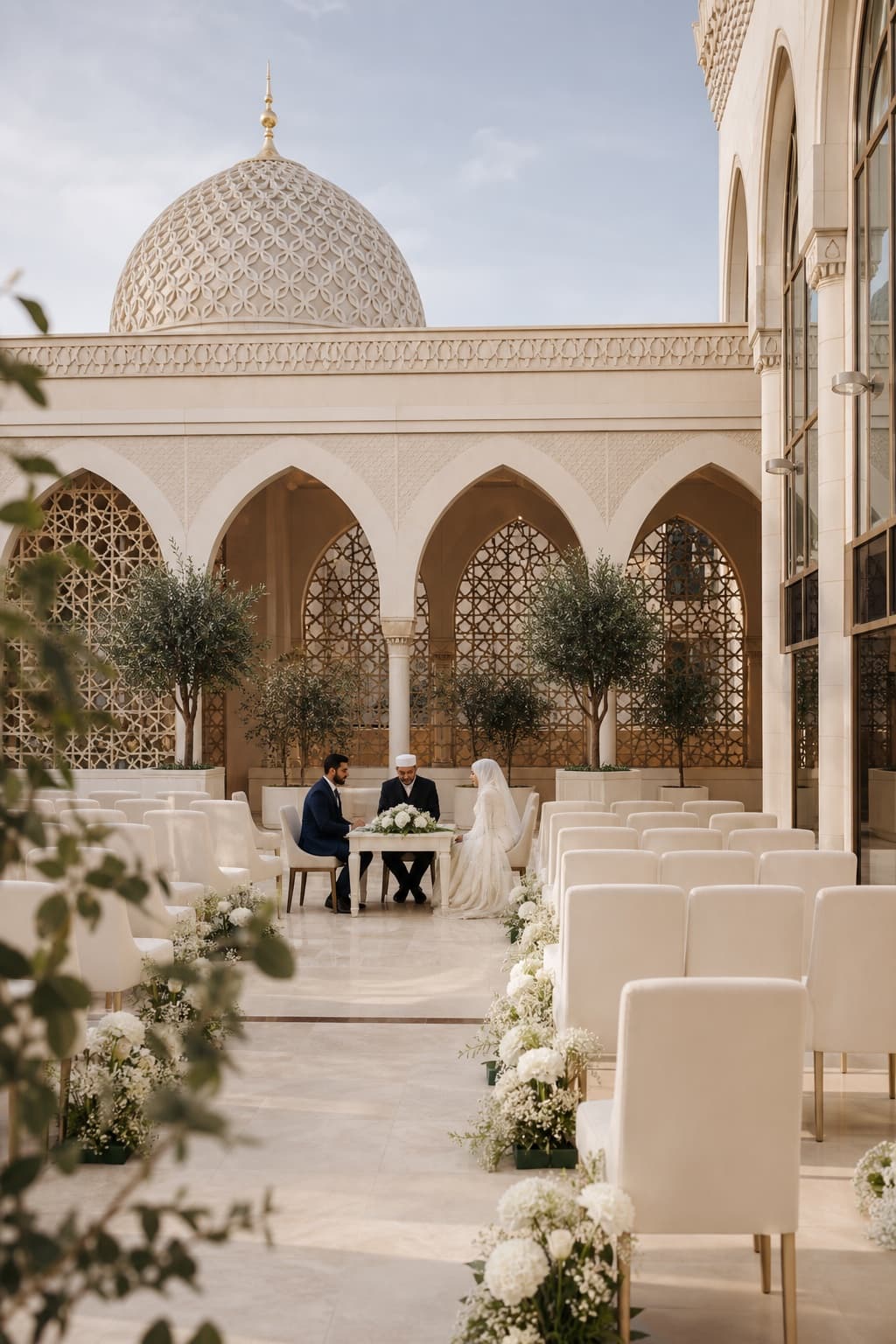
Yes. GOV.UK says a religious wedding can take place at any registered religious building, and an authorised person such as a religious minister must attend. If the venue has none, you need to book a registrar. A nikah at home or in a hall that is not registered is usually a religious marriage only.
Under the Marriage Act 1949, section 44, a marriage in a registered building takes place with open doors, with two or more witnesses, in the presence of a registrar or an authorised person. Ask the mosque or hall whether it is registered and who will attend, before you fix the date.
How does PlanMyNikah help you follow this timeline?
PlanMyNikah's free tools map onto the seven steps. The Wedding Checklist holds tasks in time blocks with a tab for each event, the Budget Planner splits your total across categories, and the Guest List tracks numbers and dietary needs. The Timeline helps sequence the day with travel buffers and optional prayer context.
- Steps 1 to 3: the Budget Planner and Guest List
- Steps 4 and 5: the Wedding Checklist and your shortlist of vendors
- Steps 6 and 7: the Seating Plan and the Timeline
- All steps: Family lets you invite relatives to share tasks, votes and updates, and you control the access
Which sources does this guide use?
The legal steps come from GOV.UK and the Marriage Act 1949. The Quran reference supports the mahr, and the product descriptions follow the current PlanMyNikah tools. The order and the timings are our suggested sequence, not rules. Religious details such as the wali and witnesses vary, so ask your imam.
The practical edit
Frequently asked questions
How far ahead should I plan a nikah?
We suggest 9 to 12 months if you want a full celebration, because the date, venue and imam decide everything else. A smaller nikah can come together in about 3 months or less. If you want a legal marriage, you must give notice at least 29 days before the ceremony.
What do I do first?
Decide where the nikah will be held and whether it will also be a legal marriage, then talk to your imam about the date. GOV.UK says the venue must be decided before you give notice, so these choices come before invitations and decor.
Can I plan a nikah in a few weeks?
Yes, a simple nikah can be arranged quickly. Book your imam and venue first. If you want a legal marriage in England and Wales, you must give notice at least 29 days before the ceremony, so book the register office appointment straight away.
Who should hold the marriage documents on the day?
Choose one trusted relative to look after them. After a legal ceremony, GOV.UK says the signed schedule is sent to your register office, where it is added to the register, and you can then apply for your certificate.
The letter from the editor
Wedding planning tips, straight to your inbox
Nikah checklists, budget advice and practical ideas, about twice a month. No spam.
Continue the edition
Related reading
Ummi Chowdhury: Bridal Artistry with an Editorial Eye
Meet Ummi Chowdhury, the London and Essex bridal hair and makeup artist with a London Runway editorial credit, a dedicated travelling team and bookings available across the UK and internationally.
PlanMyNikah vs Hitched for Muslim Weddings
A dated, fair comparison of PlanMyNikah and Hitched for UK Muslim couples: vendor directory scale, free planning tools, faith-specific details and which suits whom.
Questions to Ask a Muslim Wedding Venue Before Booking
Take this checklist to every venue viewing: halal catering, prayer space, segregation layouts, capacity, hidden costs, access, timings and contract terms.