Is a Nikah Legally Recognised in the UK? A Practical Guide
A clear guide to when a nikah is legally recognised in the UK, when you need a civil ceremony, and what to confirm with your mosque or register office.
Words by PlanMyNikah Team
1 September 2026
9 minute read
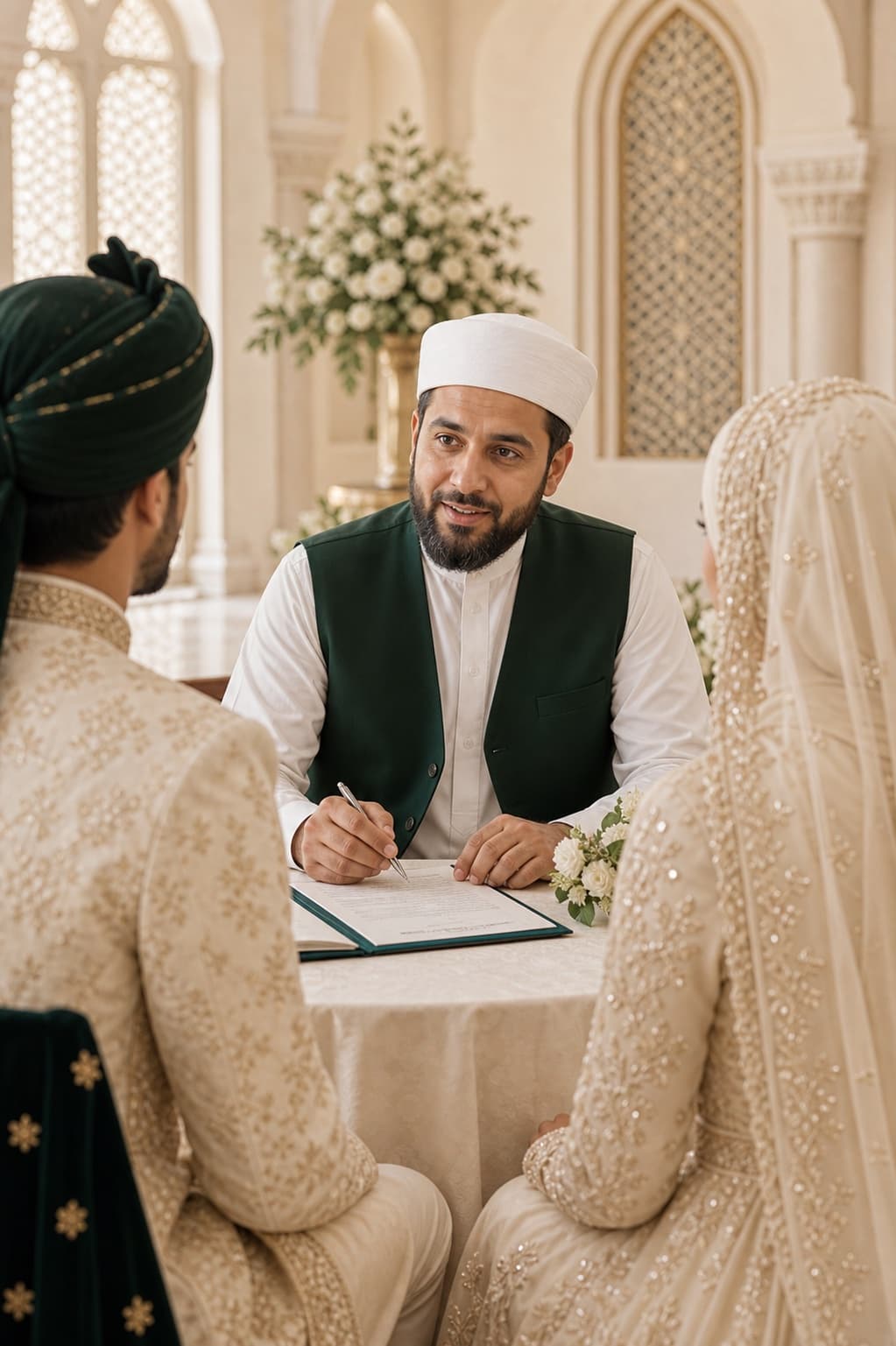
Short answer: a nikah can be legally recognised in the UK, but the religious ceremony alone does not automatically create a civil marriage. The exact position depends on where the ceremony takes place and whether the legal marriage requirements for that part of the UK are followed.
For couples marrying in England or Wales, a nikah held at home, in a wedding hall or in a mosque that is not registered for marriages will usually be a religious marriage only. To create a marriage recognised by civil law, you will normally need either a separate civil ceremony or a nikah that also satisfies the civil formalities in a registered religious building.
This guide explains the practical checks to make before you book. It is general information rather than legal advice. If you are unsure about an existing marriage or your personal rights, speak to a family solicitor or your local register office.
Religious validity and legal recognition are different questions
A nikah is the Islamic marriage contract. Its religious requirements are discussed with your imam or scholar and may include consent, witnesses and mahr. You can read our complete guide to what a nikah is if you want to understand the ceremony itself.
Civil law asks a separate question: did the ceremony follow the legal rules required to create a marriage in the place where it happened?
That distinction matters. A couple may regard themselves as husband and wife in Islam while the law treats them as unmarried partners. A nikah certificate produced by a mosque can be valuable evidence of the religious contract, but it is not automatically the same as a civil marriage certificate.
When is a nikah legally recognised in England and Wales?
In England and Wales, a religious wedding can create a legally recognised marriage when the ceremony follows the civil requirements. GOV.UK says a religious wedding can take place in a registered religious building and that an authorised person must attend and sign the marriage schedule or marriage document.
For a Muslim couple, this means a nikah may cover both the religious and legal marriage in one ceremony if all the required arrangements are in place. It is not enough that the building is a mosque or that an imam conducts the nikah. The building must be registered for marriages, and the correct authorised person or registrar must be involved.
Ask the mosque these questions before paying a deposit
- Is this specific building registered for marriages, not only for worship?
- Will our nikah also be registered as a civil marriage?
- Who is the authorised person responsible for the legal paperwork?
- Do we need to book a registrar from the local council?
- When must we give notice, and which documents should we bring?
- Who will submit the signed marriage schedule or document?
- When and how will we receive the civil marriage certificate?
Ask for the answers in writing. If the mosque says it provides a “legal nikah”, confirm which civil steps are included. This prevents the imam, venue and families from assuming somebody else has arranged the registrar.
Do you need a separate civil ceremony?
You will usually need a separate civil ceremony if your nikah venue or ceremony cannot meet the legal requirements. Many couples arrange a simple register office ceremony before the nikah, after it or on a nearby date.
The civil ceremony creates the civil marriage and legal record. The nikah remains the religious contract, with the terms and mahr agreed by the couple.
If you are using two ceremonies, put both into one planning timeline. Record the notice appointment, register office booking, nikah, document collection and any name or account updates as separate tasks. PlanMyNikah's wedding checklist can help you keep those steps alongside your venue and supplier bookings.
Giving notice in England and Wales
Before a civil or legally registered religious marriage, couples normally need to give notice at a register office. GOV.UK currently says notice must be given at least 29 days before the ceremony, and the ceremony must take place within 12 months of giving notice. Different or extended processes can apply in some immigration situations, so check your own case with the register office early.
Speak to the venue, mosque and register office before printing invitations or paying non-refundable deposits.
Can the nikah and civil marriage happen on the same day?
Yes, they can happen on the same day if the legal arrangements are confirmed in advance. One option is a nikah in a registered religious building with an authorised person or registrar completing the civil formalities. Another is to hold a civil ceremony and a separate nikah on the same day.
Coordinate who is responsible for the marriage schedule, what declarations are required for the legal ceremony and when the imam will conduct the nikah. Give the couple, witnesses and authorised person a clear call time, with one trusted relative responsible for the documents.
What if your nikah takes place at home or in a wedding hall?
A home nikah can be beautiful and personal, but in England and Wales it will not usually create a civil marriage on its own. The same applies in a wedding venue without the required civil arrangements.
You can still hold the religious ceremony there. Just plan a valid civil marriage separately if you want legal recognition. Never rely on the venue's general wedding licence without asking whether it covers your exact ceremony and whether the required registrar or authorised person will attend.
If you are still choosing who will conduct the ceremony, compare nikah imams and ask each one how they coordinate with the venue and register office. An imam can explain the religious process, but only the register office or an appropriately qualified legal adviser should confirm your civil status.
What about Scotland and Northern Ireland?
Marriage law and registration are not identical across the UK, so advice written for England and Wales should not be copied blindly elsewhere.
In Scotland, marriages may be solemnised by a civil registrar or by an authorised religious or belief celebrant. In Northern Ireland, a religious or belief marriage must be performed by a registered officiant authorised by the Registrar General. In either place, contact the relevant local registration service and proposed officiant before assuming a nikah will be legally recognised.
Wherever you live, ask one precise question: “Will this ceremony produce a civil marriage certificate recognised by the law here?” That is clearer than asking only whether the imam performs nikahs.
Is an overseas nikah recognised in the UK?
An overseas nikah may be recognised, but the answer depends on the law of the country where it took place and the couple's circumstances. GOV.UK says a foreign marriage is recognised in the UK if it was lawful in the country where it happened and would be allowed under UK law.
Keep the official marriage certificate and arrange a certified translation if needed. Do not assume that every religious certificate issued abroad proves civil registration. If there is any doubt, obtain advice before relying on the marriage for immigration, inheritance, divorce or financial matters.
A practical nikah legal-checklist
Use this list before confirming the ceremony:
- Decide whether you want the nikah and civil marriage together or as two ceremonies.
- Ask the mosque or venue whether the exact building is registered for marriages.
- Confirm whether an authorised person is available or a registrar must be booked.
- Contact the local register office and check the notice process for both partners.
- Put every booking and document deadline into your shared wedding plan.
- Confirm the religious requirements with your imam, including consent, witnesses and how you will agree and record the mahr.
- Ask who will submit the signed marriage paperwork after the ceremony.
- Check how and when you will receive the civil marriage certificate.
What about the proposed wedding law reforms?
The government opened a consultation on reforming wedding law in England and Wales on 16 July 2026. The proposals include moving towards a system focused more on authorised officiants than registered buildings.
As of 1 September 2026, this is a consultation and proposal for future reform, not a replacement for the current rules. Couples planning now should follow the law currently in force and check GOV.UK or their local register office for updates.
The practical edit
Frequently asked questions
Is a mosque nikah automatically legal in the UK?
No. In England and Wales, the fact that a nikah happens in a mosque does not by itself make it a civil marriage. Check whether the building is registered for marriages and whether an authorised person or registrar will complete the legal formalities.
Do I need a civil ceremony if I have a nikah?
You need a ceremony that meets the civil requirements if you want a legally recognised marriage. This may be built into a properly arranged nikah at a registered religious building, or it may be a separate civil ceremony.
Can a nikah and civil ceremony be on the same day?
Yes. They can be combined where the venue and authorised person meet the requirements, or held as two coordinated ceremonies. Confirm the order, paperwork and responsible people well before the date.
Is a nikah certificate the same as a UK marriage certificate?
Not automatically. A mosque or imam may issue a religious nikah certificate. A civil marriage certificate is evidence that the marriage was legally registered. Ask exactly which document you will receive.
Is a nikah performed abroad recognised in the UK?
It may be. A foreign marriage is generally recognised when it was lawful where it took place and would be allowed under UK law. Complex cases should be checked with a qualified adviser.
PlanMyNikah can help you organise the practical side of your nikah, from comparing suppliers to keeping the ceremony tasks in one place. For the legal position, always confirm the current requirements with the relevant register office.
Sources: GOV.UK: Plan your ceremony; GOV.UK: Give notice; GOV.UK: Marriages abroad; House of Commons Library: Islamic marriage and divorce in England and Wales; Scottish Government: Religious and belief marriage requirements; nidirect: Religious and belief ceremonies; GOV.UK: Tying the Knot consultation
The letter from the editor
Wedding planning tips, straight to your inbox
Nikah checklists, budget advice and practical ideas, about twice a month. No spam.
Continue the edition
Related reading
Muslim Wedding Photography Shot List: Nikah, Mehndi and Walima
Plan the photographs that matter at your nikah, mehndi, baraat and walima. This practical UK guide covers family groups, privacy, ceremony moments and the final photographer brief.
Walima Planning Checklist for UK Muslim Couples
A practical walima planning checklist for UK Muslim couples, covering guests, budget, venues, halal catering, privacy, suppliers and the running order.
Muslim Wedding Gifts: What to Give at a Nikah or Walima
Practical gift ideas for UK Muslim weddings, with guidance on cash, personalisation and receiving presents across a nikah and walima.