What to Wear to a Muslim Wedding: A UK Guest Guide
Practical outfit advice for guests at a nikah, mehndi or walima, including mosque dress codes, headscarves, colours and what to ask the couple.
Words by PlanMyNikah Team
15 September 2026
8 minute read
Updated 17 September 2026
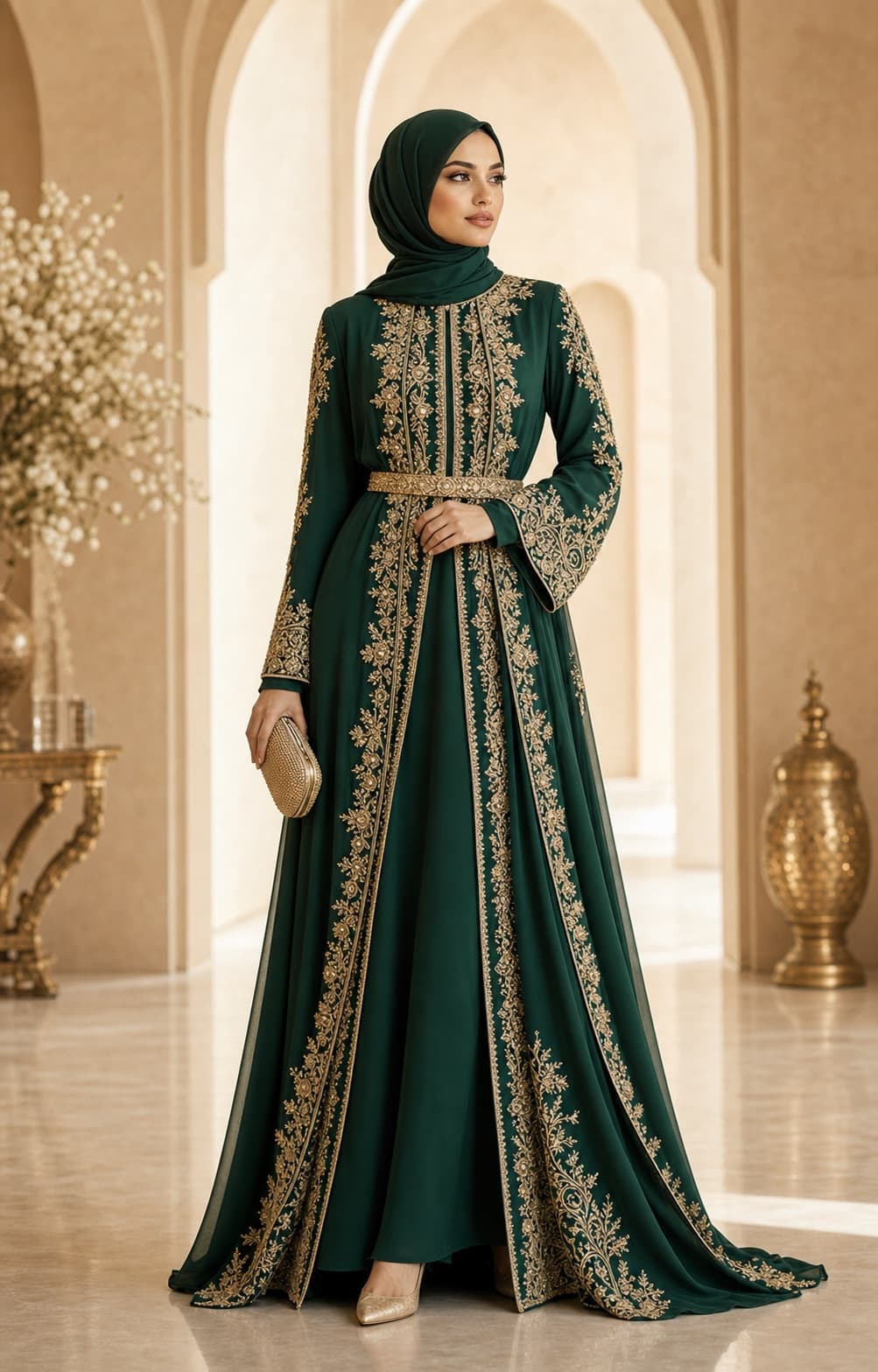
Wondering what to wear to a Muslim wedding? Start with the invitation, choose an outfit that gives you comfortable coverage, and check whether you will enter a mosque. A long-sleeved maxi dress, a loose trouser outfit or a smart suit can be a useful starting point, adjusted to the hosts' dress code.
There is no single outfit that represents every British Muslim family. This guide helps guests prepare for a nikah, mehndi or walima without guessing, and gives couples practical details to share with friends who are attending for the first time.
Check the event before choosing your outfit
Read each invitation separately. Being invited to a walima reception does not necessarily mean you are attending the nikah ceremony or a mehndi celebration. Note the venue, dress code and any theme for the event you will attend.
If unfamiliar names are making the plan confusing, our guide to what a nikah involves is a useful introduction. For clothing decisions, the important question is where you will be and what your hosts have requested.
Ask whether the ceremony takes place in a prayer hall, a separate function room or a reception venue. A hotel address does not tell you the family's expectations, and a mosque complex may contain spaces with different arrangements. Confirm rather than assuming.
A simple message to the couple
Try: “I'm looking forward to celebrating with you. Is there a dress code for the ceremony and reception? Should I bring a headscarf, and are there any colours you would prefer guests to avoid?”
If the invitation names a family contact, ask them instead. Sending a photograph of an outfit you already own can make the answer easier.
Outfit ideas for women
As a practical starting point, look for opaque fabric, a neckline you are comfortable sitting and bending in, and sleeves and a hem that provide the coverage requested. Check the back of the garment as carefully as the front.
The following are outfit suggestions, not religious rulings or requirements to buy something new.
A long-sleeved maxi dress
Try a flowing dress with a comfortable lining and enough room to walk naturally. Check whether a side slit opens when you sit down. If the sleeves are lace or mesh, decide whether an opaque layer is needed.
Add shoes you can manage throughout the event and a scarf if the venue requires one. A dress that works only while standing still will become tiring during arrivals, photographs and the meal.
A tunic and loose trousers
A longer tunic with wide-leg trousers can be an alternative to a dress. Check that the tunic stays comfortably in place when seated and that the trousers do not trail beneath your shoes.
An embroidered kurta or shalwar kameez is another option if it suits the event. If you are borrowing an unfamiliar outfit, ask its owner to show you how the pieces sit together.
An abaya or occasionwear outfit
An occasion abaya, a lined kaftan or a long skirt with a coordinating top can also work with the hosts' requirements. The garment's name alone does not establish its coverage: inspect open sleeves, necklines and fastenings.
If you are browsing modest wear on PlanMyNikah, use the same checks and confirm sizing, lining and alterations directly with the seller. You can also start with your own wardrobe and add a suitable layer.
Outfit ideas for men
A smart suit with a shirt is a straightforward option to ask the hosts about. Choose the level of formality from the invitation, rather than assuming every reception needs black tie.
If you prefer a kurta with trousers, shalwar kameez or a thobe, check that the outfit feels appropriate to the family's occasion. You do not need to imitate the groom's outfit to look ready for a celebration.
Try everything on with the shoes you will wear. Check trouser and garment lengths, movement when sitting, and whether any layers feel too warm indoors. If the invitation specifies a colour or particular clothing, clarify whether that applies to all guests or only close family.
What changes for a mosque nikah?
Check the specific mosque's visitor guidance before leaving home. For example, East London Mosque's visitor guidelines require shoes to be removed before entering prayer halls and ask women to cover their head and chest with a scarf. Its guidance also addresses clothing coverage and transparency.
That is an example of a real venue's requirements, not a substitute for the instructions at your wedding venue.
Pack a scarf that is large enough for the requested coverage and practise putting it on if it is unfamiliar. Choose something that stays in place comfortably rather than relying on a small decorative wrap.
If footwear must be removed, plan for that: wear suitable socks if you prefer them, choose shoes you can manage easily, and keep your bag organised. Let the host know beforehand if you need assistance with footwear or a chair while getting ready to enter.
Match the nikah, mehndi and walima arrangements
Nikah ceremony
Choose clothing that works for the ceremony's setting and any movement between rooms. If you are travelling straight to a reception afterwards, plan an outfit and layers that can accommodate both dress codes.
Do not assume a short ceremony means casual clothing. The hosts may still want formal photographs.
Mehndi celebration
If the family has requested colourful clothing or a theme, use it as your starting point. There is no need to apply another family's traditions to this event.
If you intend to have henna applied, think about sleeves and accessories that can be moved out of the way. Organise your coat, bag and transport before your hands are occupied, and follow the artist's advice about aftercare.
Walima reception
Use the reception invitation to judge the level of formality. A dressy outfit may suit the occasion, but the word “reception” does not cancel the family's modesty or privacy expectations.
For a women-only space, ask what applies during arrival, in corridors and when leaving. Do not assume that every member of staff or every part of the building is covered by the same arrangement.
Colours: ask about preferences, not blanket rules
You may find conflicting advice about black, white, red or bridal colours. For etiquette, the useful answer comes from the hosts. Hitched's wedding dress-code guide also advises checking the couple's preferences and colour themes for a Muslim wedding.
Ask whether a colour is reserved for the couple, close family or a coordinated group. If you already own an outfit in that colour, send a photograph rather than making an expensive assumption.
Where no theme is specified, choose something celebratory that respects the requested coverage and formality. Avoid buying a heavily bridal-looking outfit without checking. These are practical guest considerations, not a list of religiously prohibited colours.
Prepare for the journey as well as the photographs
Try your complete outfit on before the day. Sit in it, walk up a step, reach for your bag and practise putting on your coat. Check it in daylight as well as indoor lighting, especially if the fabric looks sheer.
For travel across London or another UK city, think about the distance between transport and the entrance. A manageable hem and comfortable shoes may matter more than matching an inspiration photograph.
Pack layers that work with the outfit, and ask about coat storage if you need it. If you are changing between events, confirm where you can do that privately. Avoid planning a change that depends on finding an empty room on arrival.
You do not need a different outfit simply because the celebrations have different names. Rewearing can be practical where the dress codes allow it.
If you are choosing a present as well as an outfit, our Muslim wedding gift guide covers the couple's preferences and practical handover details.
A note for couples welcoming first-time guests
Give guests concrete instructions instead of just writing “dress respectfully”. Explain the coverage requested, whether a scarf is needed, where shoes are removed and whether there are event-specific colours.
If you have separate spaces, explain the arrangements without suggesting guests can assume complete privacy everywhere. Tell them about any restrictions on photographs and sharing images.
Our Muslim wedding invitation wording guide can help you separate the details for each event. Add a named contact so guests can ask questions without worrying that they are bothering you.
The practical edit
Frequently asked questions
What should a non-Muslim guest wear to a Muslim wedding?
Follow the hosts' dress code and the venue's requirements. A modest dress, loose coordinated outfit or smart suit can be a starting point. You do not need to guess a cultural outfit from photographs online. Ask before buying if you are unsure.
Do you have to wear a hijab to a Muslim wedding?
Check the setting and the hosts' instructions. A mosque may require women visitors to cover their hair, while reception arrangements can differ. Bring an appropriate scarf when requested, and ask how it should be worn if you need help.
Can you wear black to a Muslim wedding?
Check with the couple rather than treating internet advice as a universal rule. For guest etiquette, what matters is whether black fits their preferences, any colour theme and the formality of the event. A quick photograph can resolve uncertainty.
What should a male guest wear?
Ask whether a suit is suitable or whether the hosts have requested particular clothing. If choosing traditional clothing, check the fit and how it is worn. Comfortable movement and the stated dress code are more useful guides than copying the groom.
What should you wear to a walima?
Choose reception clothing that meets the family's dress code, whether that is a dress, coordinated outfit, suit or traditional clothing. Confirm any colour theme and privacy arrangements. Do not assume the expectations are identical to a mehndi held by the same family.
Sources: East London Mosque, visitor guidelines; Hitched, wedding dress codes; Bridebook, Muslim wedding guide. Sources checked 15 September 2026. FAQ wording was informed by Google autocomplete and questions in the guides reviewed. Outfit combinations and preparation checklists are editorial suggestions.
The letter from the editor
Wedding planning tips, straight to your inbox
Nikah checklists, budget advice and practical ideas, about twice a month. No spam.
Continue the edition
Related reading
Muslim Wedding Photography Shot List: Nikah, Mehndi and Walima
Plan the photographs that matter at your nikah, mehndi, baraat and walima. This practical UK guide covers family groups, privacy, ceremony moments and the final photographer brief.
Walima Planning Checklist for UK Muslim Couples
A practical walima planning checklist for UK Muslim couples, covering guests, budget, venues, halal catering, privacy, suppliers and the running order.
Muslim Wedding Gifts: What to Give at a Nikah or Walima
Practical gift ideas for UK Muslim weddings, with guidance on cash, personalisation and receiving presents across a nikah and walima.