Asian Bridal Makeup Trial: A UK Muslim Bride’s Checklist
Make your bridal trial a rehearsal for the whole look, not just the makeup. A practical guide to hijab and dupatta setting, privacy, photographs and preparation for your nikah or walima.
Words by PlanMyNikah Team
20 October 2026
9 minute read
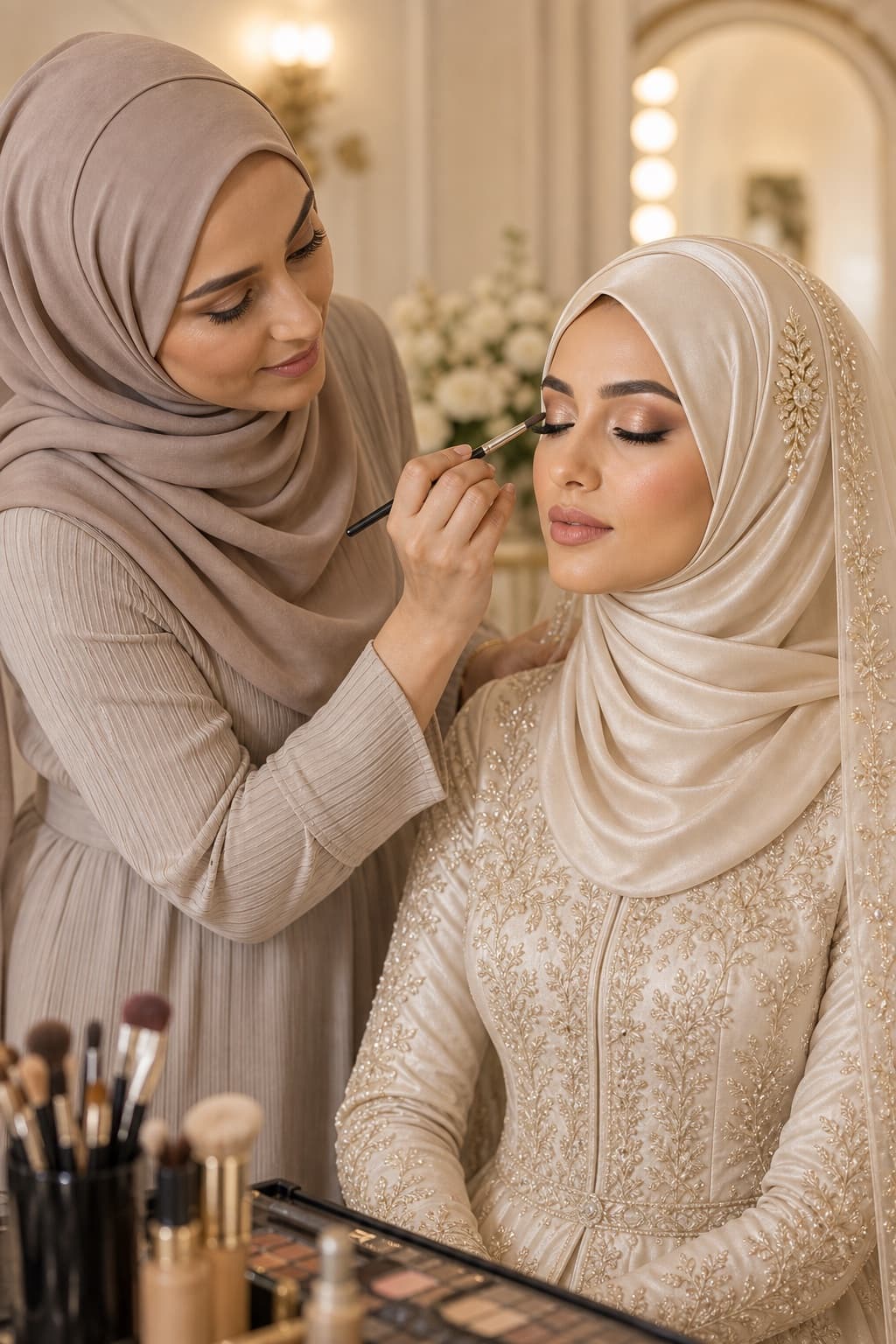
Your Asian bridal makeup trial should answer a practical question: will this look work for the wedding you are actually having? A beautiful close-up is useful, but it cannot show whether your dupatta feels secure, your scarf gives the coverage you want or the preparation schedule leaves room to breathe.
For a British Muslim bride, the rehearsal may involve a nikah at a mosque, a women-only mehndi and a walima with different privacy arrangements. Use the trial to join those details together. You do not need to arrive knowing every makeup technique. You need to explain your preferences and leave with a plan you understand.
Start with your events, not a single inspiration photograph
Write down which celebrations you want the artist to cover. Include the date, preparation address, venue, travel plans and the time you need to leave. Separate the nikah, mehndi and walima rather than assuming a package includes them all.
Describe what you normally wear and what would feel unfamiliar. Perhaps you want defined eyes but dislike a heavy base. Perhaps you enjoy a bold lip but do not want lashes. These are useful instructions, not awkward requests.
Choose reference images for particular details: the lip colour in one, the scarf shape in another. Explain the difference between admiring a photograph and wanting the complete look yourself. Keep room for the artist to suggest alternatives.
Make a short brief
Include your outfit colours, neckline, jewellery, preferred coverage and any changes between events. Add what you definitely do not want. If relatives are helping, agree who will give the final approval so the consultation stays focused on you.
Confirm what the trial actually includes
Before paying, ask whether the appointment covers makeup alone or the complete arrangement of hair, hijab, jewellery and dupatta. Those services should be named, not hidden inside the word “bridal”.
UK providers package them differently. Uzma’s describes hijab, dupatta and jewellery setting within its Asian bridal service. Roksana Rahman lists a combined bridal makeup and hijab service, with separate conditions for trial appointments. Neither example tells you what another artist includes.
Ask whether you can trial before committing to the wedding booking, whether your date is reserved, and what happens if you decide against the look. Request the actual payment and cancellation terms without assuming a trial fee secures the wedding.
Confirm who will attend both appointments. Bridal By states that its trial and wedding artists are the same, but that is a provider policy to check, not an industry promise.
Bring the pieces that change the finished look
Ask the artist what to bring and how to arrive. Prepare a small trial bag rather than relying on photographs scattered across family messages.
Useful items to discuss bringing include:
- Your planned hijab, undercap and dupatta, where available.
- The jewellery you intend to wear, including forehead pieces.
- Outfit photographs showing the neckline and embellishment.
- A fabric swatch or clothing in a similar colour.
- Your usual foundation or lip product, if you hope to use it.
- Written preferences about products, lashes and photography.
If the outfit is unfinished, say so. Ask which decisions can be made now and which need checking again when the clothes arrive. Do not present a temporary scarf as the final fabric without explaining the difference.
Keep delicate items protected and ask permission before bringing a full outfit. The appointment space may not have a private changing area.
Rehearse hijab, dupatta and jewellery together
Treat the head covering as part of the trial, not something to add after the makeup is approved. Show the stylist the coverage you want around your hairline, neck and chest.
Try the arrangement while sitting, standing and turning your head. Can you look down comfortably? Does the edge stay where you want it? Can you put on your outer layer without disturbing everything? These are editorial rehearsal suggestions, not a promise that a particular style will suit everyone.
Discuss how the dupatta will be supported and who will help if it shifts. Ask the stylist to explain the fastening arrangement before you leave. Avoid a plan that only works while you remain completely still.
Agree who handles each part
If you are booking separate makeup and hijab specialists, put them in contact with your permission. Ask them to agree the order of work and the space they need. Do not discover on the morning that each expected the other to set your jewellery.
Check the look beyond the artist’s chair
Before approving, look at the makeup in a mirror as well as a photograph. With permission, take unfiltered pictures from the front and side, and compare the face with the neck and any visible skin.
Ask to see the finished look in daylight where possible. Note what you like in clear language. “Less shine around my nose” is easier to act on than “something feels wrong”.
If the appointment terms allow you to keep the makeup on, ask what to observe afterwards and how to send feedback. Some trial services require removal before leaving, so check first rather than planning an evening around wearing it.
Use our Muslim wedding photography shot list to think through which preparation photographs you actually want. A makeup trial is not permission for anyone to publish your images.
Put privacy and personal boundaries in writing
Explain whether you need a women-only preparation room and ask who may attend, including assistants or anyone filming content. Confirm the arrangements with the venue too.
Make separate decisions about taking photographs, keeping them as a private reference and posting them publicly. You can ask for no social sharing even if you allow photographs for recreating the look. Ask how that preference will be recorded and passed to the team.
For a segregated event, consider the route out of the preparation room as well as the room itself. Our segregated wedding planning guide explores entrances, staffing and privacy beyond the bridal suite.
Discuss prayer breaks and any need to remove or reapply products. Ask a trusted qualified scholar about religious questions around wudu or particular products; a beauty appointment should not be treated as a religious ruling.
Build the morning backwards from departure
Give the artist your departure deadline, not just the ceremony start. Then agree when each part of the preparation begins and ends.
Account for dressing, scarf and jewellery setting, photographs, private family time and the journey. Add other relatives’ appointments to the same plan so you can see whether the team and room are sufficient.
For each event, record who is responsible for:
- Opening the preparation room and arranging access.
- Bringing the outfit, scarf and jewellery.
- Keeping interruptions manageable.
- Confirming when photography may begin.
- Carrying any agreed touch-up items.
Choose a trusted contact who can answer logistical questions while you are getting ready. They should support your decisions, not authorise a different look without asking you.
Compare complete quotes, not a headline price
Ask for a written breakdown covering the trial, each event, named services, travel, early starts, additional artists and any return visit or touch-up service. Confirm whether taxes and other charges are included.
Do not assume a natural-looking style is sold as party makeup. Hijab Stylist specifically distinguishes the desired finish from the service category. Tell the artist you are the bride and ask which package fits your actual requirements.
There is no single price quoted here because a current, itemised offer is more useful than an unsupported average. If the total exceeds your budget, ask which services can be removed or simplified without leaving a gap in the preparation plan.
If you are beginning your search, you can browse bridal makeup suppliers on PlanMyNikah. Confirm availability, services and any privacy requirements directly with the artist.
Leave with a record you can use
Before leaving, summarise the agreed look and outstanding decisions. Ask the artist to record the shades or products they need to recreate it, with your permission to retain reference photographs.
Send feedback while the details are fresh. Separate essential changes from optional ideas, and ask whether a further appointment is needed. If you are unhappy, say what did not work before confirming anything else.
Your final note should identify the artist, events, services, ready-by times, privacy preferences and person handling questions on the day. The aim is a clear agreement, not a perfect mood board.
The practical edit
Frequently asked questions
When should I book my bridal makeup trial?
Ask your shortlisted artist about their booking process and available trial dates. Leave room to make changes, and establish whether the wedding booking comes before or after the trial. Avoid treating another artist’s suggested timing as a universal deadline.
What should I bring to a makeup trial?
Confirm with the artist, then bring your references and the items needed to test the complete arrangement. For a hijab-wearing bride, that can include the scarf, undercap, dupatta, jewellery and outfit details. Explain which pieces are not final.
Is hijab and dupatta setting included in bridal makeup?
Not automatically. Some providers combine these services; others price or book them separately. Ask for hijab, dupatta and jewellery setting to be listed in your quote, and confirm whether they will also be rehearsed at the trial.
Will the same makeup artist attend the wedding?
Ask explicitly. A team booking may involve a lead artist and assistants, while another service may be delivered by an individual. Confirm who does your trial, who prepares you on the day and how any replacement would be handled.
Can I book party makeup for a simple nikah look?
Describe the event honestly and ask the provider. A softer finish does not automatically change a bridal appointment into a party service. Compare the work, time and inclusions you need rather than choosing a label that does not match the booking.
Sources: Hitched, questions for your wedding makeup artist; Bridebook, makeup artist questions; Uzma’s, bridal makeup FAQs; Hijab Stylist, FAQs; Roksana Rahman, bridal makeup and hijab; Bridal By, FAQs; Aishi, trial service conditions. Checked 20 October 2026. Provider examples describe their own services, not market-wide guarantees. Rehearsal prompts and planning checklists are editorial suggestions; FAQ themes were informed by Google autocomplete and provider questions.
The letter from the editor
Wedding planning tips, straight to your inbox
Nikah checklists, budget advice and practical ideas, about twice a month. No spam.
Continue the edition
Related reading
Halal Wedding Cake Guide for UK Muslim Couples
Choose a halal wedding cake with confidence. This practical UK guide covers ingredients, certification, allergens, tastings, delivery and venue setup.
Asian Wedding Food Menu Ideas for UK Muslim Couples
Build a balanced halal menu for your mehndi, nikah, baraat or walima. This practical UK guide covers dishes, service styles, allergies and tasting questions.
Muslim Wedding Photography Shot List: Nikah, Mehndi and Walima
Plan the photographs that matter at your nikah, mehndi, baraat and walima. This practical UK guide covers family groups, privacy, ceremony moments and the final photographer brief.