How to Plan a Segregated Wedding in the UK
A practical guide to planning a segregated nikah celebration, mehndi or walima, from room layouts and guest arrivals to staffing, food service and privacy.
Words by PlanMyNikah Team
12 September 2026
8 minute read
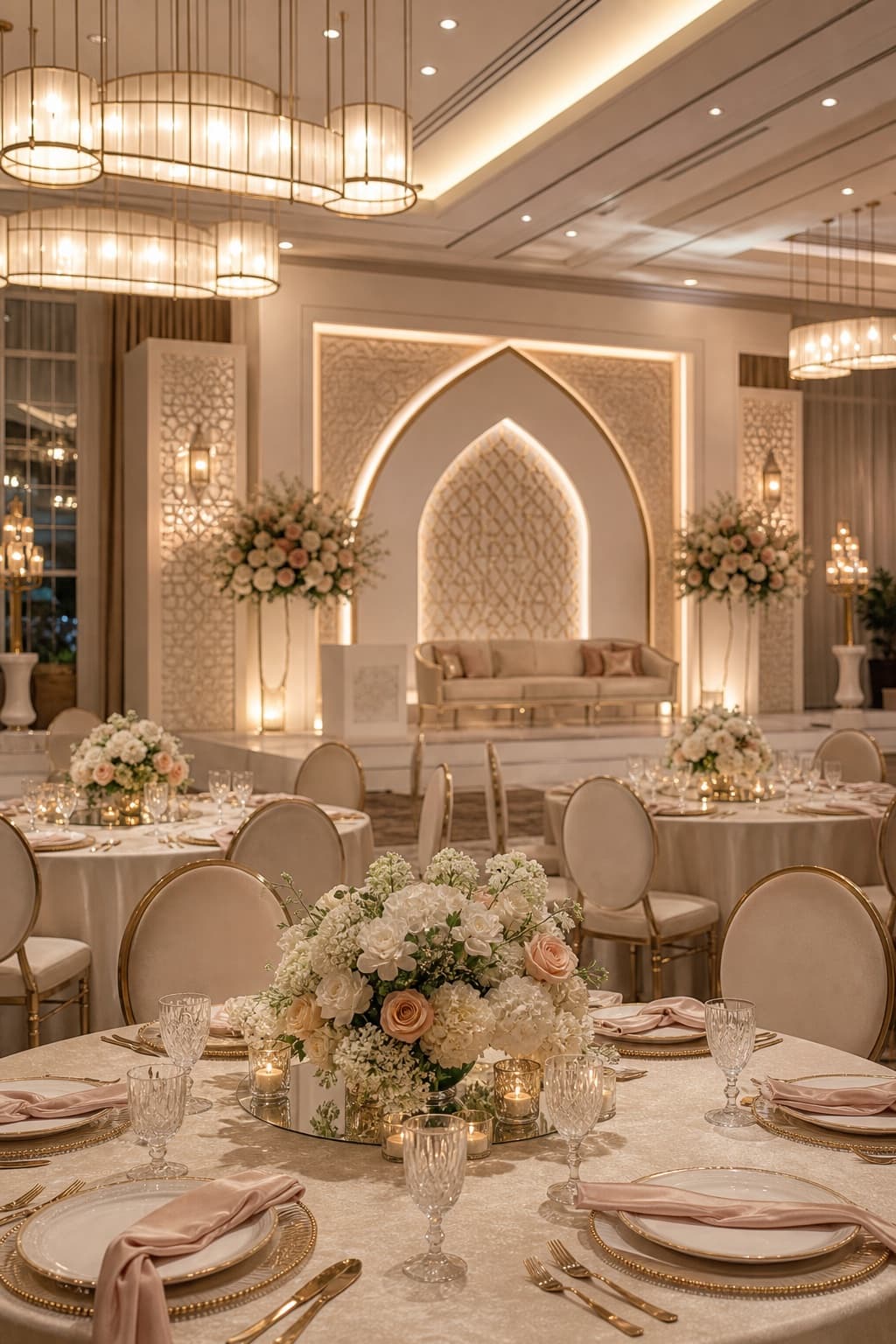
Planning a segregated wedding in the UK starts with a shared understanding of what privacy means for your day. Separate tables, a screened hall and separate rooms are different arrangements. The right plan connects the layout with guest arrivals, staff access, food service and photography, so nobody has to improvise while you are celebrating.
This guide is for couples arranging separate men's and women's spaces for a nikah celebration, mehndi or walima. Agree your religious requirements with your imam where needed, then give your venue a practical brief it can deliver.
Agree the boundaries before choosing the layout
Write down which parts of each event will be separate. Include the welcome area, meal, stage, photographs and departure. If your mehndi has different arrangements from your walima, prepare a separate brief for each.
Decide who may enter each space and when. Avoid a vague instruction such as “family are allowed”, because relatives may understand that differently. Any agreed visit by the groom or other men needs a clear arrangement that respects the privacy of the women attending.
Ask guests privately about access or caring requirements that affect where they can sit. Make arrangements for someone who needs a particular carer, and tell them what to expect before they arrive. A successful plan protects privacy while making people feel welcome.
Choose between separate rooms and a divided hall
Separate halls and partitioned spaces are both approaches described in Seatbee's Muslim wedding seating guide. Neither description tells you whether a particular venue will meet your needs: the details of your booking matter.
Separate rooms
Check each room as if it were hosting the whole celebration. Both sides need suitable seating, ventilation, comfortable lighting, clear announcements and reliable service. Find out whether guests must cross the other room to reach toilets, prayer facilities or the exit.
Do not allocate the rooms by assuming an equal split. Use your actual guest list, including children and carers, and ask the venue to confirm the seated capacity of each proposed layout.
A partition within one hall
Ask to see the proposed screen or divider in position. Check the view from the entrance, stage, service doors and any balcony. A decorative partition may leave gaps or become see-through when lit from behind.
Ask how sound will travel between the sections and where food service will happen. The venue should approve the installation and keep access and emergency routes clear. Do not accept a layout that depends on blocking a door.
Take the wider Muslim wedding venue question list to your viewing so catering, access times and room hire are discussed together.
Walk through the guest journey
Before confirming the arrangement, physically follow the route a guest would take. Start at the drop-off point, pass through reception, find the correct room, locate the toilets and return to the table.
Look for moments when privacy depends on chance: doors opening towards the stage, a shared queue outside the women's entrance, or a corridor used by another event.
Give entrances clear names and signs. If everyone arrives through a shared foyer, explain that honestly in your guest information. Ask the venue how it will manage arrivals, particularly if another function is taking place nearby.
Agree a discreet meeting point for households leaving together, with a host available to pass messages. Plan where pushchairs, coats and gifts go so guests do not have to wander through unfamiliar spaces.
Confirm staff coverage for the whole booking
A venue offering segregated seating is a useful starting point. For example, Cavendish Banqueting's Muslim weddings page advertises that option. You still need written confirmation of how your own event will operate.
If you require female staff in the women's area, ask about every role: serving, clearing tables, coordination, photography, videography and technical support. Confirm the hours covered and what happens during breaks or a late finish.
Ask who responds if a microphone fails or a spill needs attention. An event manager should know the access requirements and have an agreed way to announce any necessary entry. Emergency assistance must never be delayed by the event's privacy arrangements.
Share the same brief with outside suppliers. A decorator arriving for collection should not have to guess whether guests are still using the room.
Give both rooms a complete celebration
Separate spaces should receive equal care. Compare the comfort of the seating, the view of any stage, the quality of the sound and access to refreshments. Plan appropriate activities or conversation space for each side.
Give the caterer guest and meal counts by room, including children's meals and dietary requests. Ask how the team will coordinate service so one side is not finishing dessert while the other waits for mains.
For a buffet, map the queue and serving route. For table service, confirm which team covers each section and who handles missing meals. Keep the relevant dietary information with the catering team.
Check prayer arrangements against local timings for your date. Agree who will announce a pause, where guests can pray and how service resumes afterwards. Keep that space available throughout the event.
Decide the couple's entrance and photograph plan
Choose the moments you want to share as a couple, then work backwards from your privacy requirements. You might prefer private portraits in another room, separate entrances or an agreed shared moment with advance notice.
Write down the location, people present and person responsible for coordinating each transition. If men will enter a women's space at an agreed time, tell guests beforehand and allow them time and somewhere suitable to prepare. Do not spring the change on them during the event.
Keep the photographer's instructions specific. Explain which areas can be photographed, whether images may be displayed elsewhere and who may receive them afterwards.
A female photographer does not automatically mean female videographers, assistants or editors. Use the guide to booking a female wedding photographer to prepare your questions. Agree guest phone and social sharing expectations separately.
Build a running order with named contacts
Use a shared running order with a clear section for each room. Include supplier access, guest arrivals, entrances, food service, prayer arrangements, photographs and the finish.
For every transition, record who makes the decision and who tells the other room. A named host on each side can coordinate with the venue manager, leaving the couple free to enjoy the occasion.
Before guests arrive, test announcements from inside both spaces. Check any screen feed and microphone arrangement with the privacy brief in mind. Do not turn on a video feed into a private area without explicit agreement.
If timings slip, have the hosts confirm the revised plan together before either room makes an announcement. That small habit helps avoid conflicting instructions.
Compare quotes using the same requirements
Send shortlisted venues the same guest counts, event hours and layout brief. Ask them to itemise room hire, partitions, staffing, sound equipment, screens, setup, clearing and any additional access time.
Separate required items from optional styling. For example, a second decorative stage is a different decision from adequate sound in both rooms. Ask what is included before deciding which quote offers better value.
You can start a shortlist through PlanMyNikah's UK wedding venues, then confirm availability and arrangements directly. A listing or photograph cannot replace the final agreed floor plan and booking details.
Your final handover checklist
Use this suggested checklist with your venue manager and room hosts:
- The couple and venue have agreed what “segregated” means for every part of the event.
- Room allocations reflect the guest list and confirmed layout capacities.
- Entrances, signs, toilets, prayer access and departure arrangements have been checked.
- Staffing requirements cover service, breaks, technical support and clearing.
- Each room has its own catering count and named host.
- Couple entrances, portraits and any changes to privacy arrangements are scheduled.
- Photography, video feeds and guest phone expectations are clear.
- Suppliers have the same running order and know who can approve changes.
If a detail is still uncertain, assign it to someone to resolve before the event. “We will sort it on the day” is a poor handover for something your guests rely on.
The practical edit
Frequently asked questions
What does a segregated wedding mean?
It describes a wedding with separate arrangements for men and women, such as different rooms or divided sections. Ask the couple what applies to the specific event, including entrances, seating and photography. The term alone does not explain every boundary.
How do the bride and groom enter?
Agree the route and timing with the venue and room hosts. Separate entrances can keep each celebration private. If you choose a shared entrance or another agreed visit, brief guests beforehand and arrange any privacy transition before it happens.
Do the bride and groom sit together?
That depends on the arrangements you choose and the religious requirements you follow. Discuss the question with your imam if needed. Plan time together in a suitable private space if you want to keep the reception rooms separate throughout.
How does picture taking work?
Prepare a list of photographs, locations and people needed. Confirm the team permitted in each space, where private couple portraits happen and who can access the finished images. Give guests clear instructions about taking and sharing photographs too.
Sources: Cavendish Banqueting, Muslim weddings; Seatbee, Muslim wedding seating guide. FAQ topics were informed by a public couple's questions about organising a segregated wedding and Google autocomplete; forum comments are not used as religious authority. Sources checked 12 September 2026.
The letter from the editor
Wedding planning tips, straight to your inbox
Nikah checklists, budget advice and practical ideas, about twice a month. No spam.
Continue the edition
Related reading
Muslim Wedding Photography Shot List: Nikah, Mehndi and Walima
Plan the photographs that matter at your nikah, mehndi, baraat and walima. This practical UK guide covers family groups, privacy, ceremony moments and the final photographer brief.
Walima Planning Checklist for UK Muslim Couples
A practical walima planning checklist for UK Muslim couples, covering guests, budget, venues, halal catering, privacy, suppliers and the running order.
Muslim Wedding Gifts: What to Give at a Nikah or Walima
Practical gift ideas for UK Muslim weddings, with guidance on cash, personalisation and receiving presents across a nikah and walima.