Asian Wedding Food Menu Ideas for UK Muslim Couples
Build a balanced halal menu for your mehndi, nikah, baraat or walima. This practical UK guide covers dishes, service styles, allergies and tasting questions.
Words by PlanMyNikah Team
6 October 2026
9 minute read
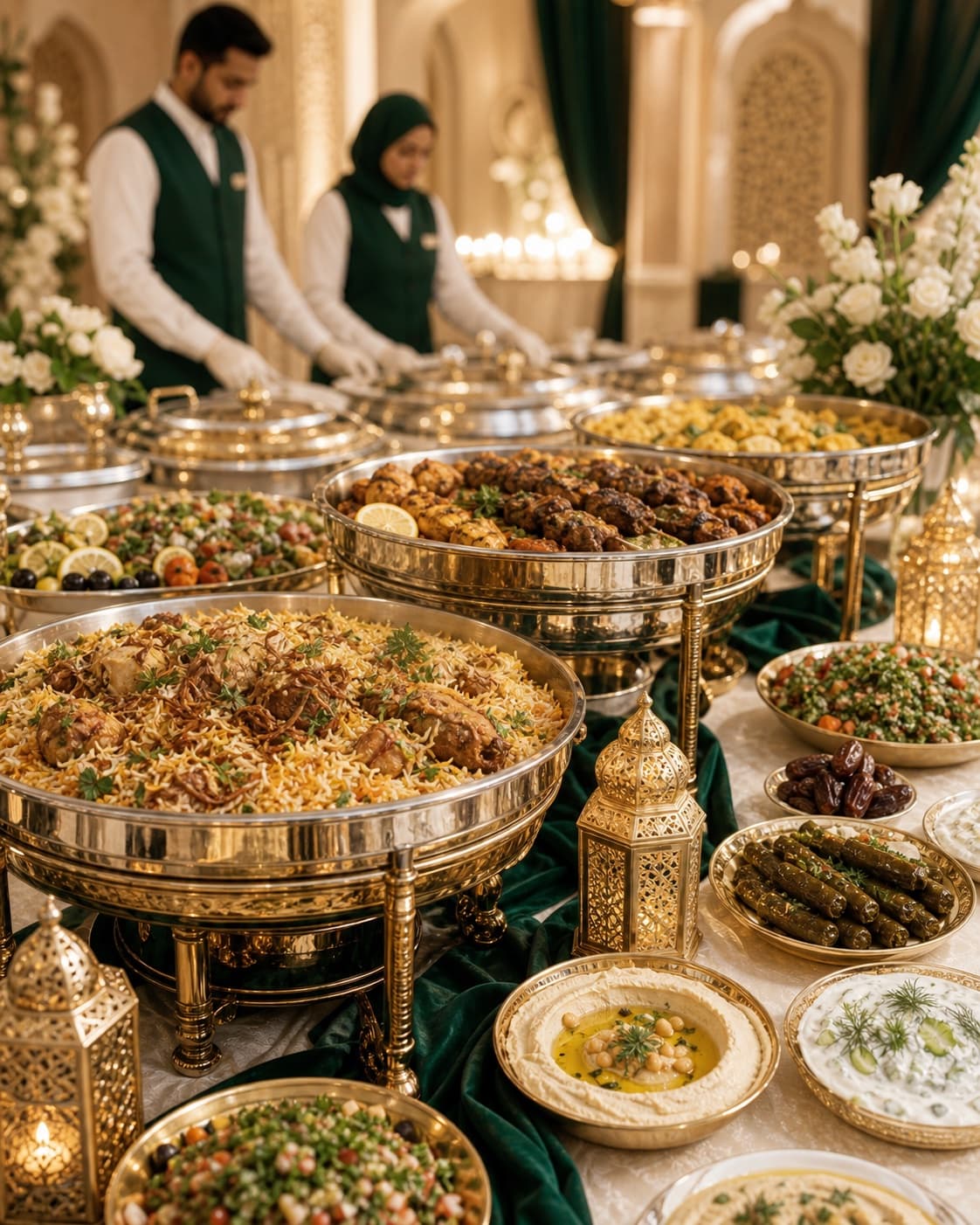
Planning an Asian wedding menu can quickly become a family negotiation. One person wants the biryani everyone expects, another wants a modern live station, and somebody is worried that guests will leave hungry. The best menu is not the longest one. It is a meal that feels generous, reflects both families and can be served well in your venue.
This guide gives British Muslim couples practical Asian wedding food menu ideas for a nikah, mehndi, baraat or walima. Use it as a starting point, then shape it around your heritage, halal requirements, guest needs and caterer's strengths.
Start with the event, not the dish list
Before naming dishes, decide what the meal needs to do. A relaxed mehndi at home needs a different menu from a formal walima in a banqueting hall. Ask:
- Is this the main wedding meal or one of several events?
- Will guests be seated, using a buffet or eating from sharing platters?
- How does food fit around prayer, speeches and photographs?
- Does the venue have suitable catering space and access?
- Are both families expecting a particular regional dish or style of service?
If you are planning several events, give each meal its own identity. Serving the same rice, curry and dessert at every function may be easy, but it can make the celebrations blur together. A lighter mehndi menu, a simple nikah meal and a more polished walima menu often create better variety.
A simple formula for a balanced Asian wedding menu
Think in roles rather than trying to collect as many dishes as possible. A useful buffet structure is:
- a welcoming drink and a light bite;
- vegetarian and meat starter choices;
- one memorable rice dish;
- contrasting mains, including a strong vegetarian option;
- bread, salad, chutneys or raita;
- a warm dessert and a lighter sweet option;
- tea, water and alcohol-free cold drinks.
This is a framework, not a rule. Bengali fish, Pakistani lamb curry, Gujarati vegetables, Hyderabadi biryani or a British-Asian dessert can all fit. Aim for contrast in spice, texture and richness, and give vegetarian guests a complete meal rather than side dishes.
Choose a hero dish
Give the menu one or two dishes that guests will remember. That might be a family-style biryani, slow-cooked nihari, roast lamb, a regional fish curry or a well-run chaat station. Ask the caterer which dishes they execute most consistently at wedding scale. Their best dish is usually a safer centrepiece than an unfamiliar idea added only because it looks impressive online.
Keep children's and elders' needs visible
Include food children and older relatives can eat comfortably, such as mild chicken, rice, daal or grilled options. Guests should be able to build a satisfying plate without choosing every spicy dish.
Asian wedding food ideas by event
Mehndi menu ideas
A mehndi often suits food that feels colourful, social and easy to eat while guests move around. Consider:
- chaat, pani puri or papri chaat prepared at a staffed station;
- samosas, pakoras, kebabs or grilled paneer;
- chicken tikka wraps or small naan rolls;
- one rice or noodle dish for guests wanting something substantial;
- fresh fruit, kulfi, falooda or colourful mithai;
- mango lassi, mint lemonade, rose drinks or masala chai.
For street-food stations, plan the queue, labels and cleaning before the day.
Nikah meal ideas
A nikah meal can be simple and still feel special. If the ceremony is at a mosque, home or community hall, choose food that travels and serves reliably. A practical menu might pair kebabs or samosas with biryani, a mild curry, salad, raita and one warm dessert.
For a daytime nikah, afternoon tea with savoury pastries, sandwiches, mithai and alcohol-free drinks can suit a smaller gathering. If the walima follows, avoid making both meals heavy.
Baraat or main reception menu ideas
The main reception can carry the broadest menu, but variety should still have a purpose. A South Asian buffet could combine:
- grilled or tandoori starters;
- a vegetarian starter such as paneer tikka or aloo chaat;
- biryani, pilau or another regional rice dish;
- one dry main and one gravy-based main;
- daal or a substantial vegetable curry;
- naan or roti, salad and cooling accompaniments;
- gulab jamun, kheer, gajar halwa, kulfi or a British-Asian dessert table.
For mixed backgrounds, choose a meaningful dish from each family instead of forcing two full menus together.
Walima menu ideas
A walima menu often feels slightly more formal, but it does not have to be extravagant. Start with what generous hospitality means to you. That may be beautifully served traditional food, a restaurant meal, sharing platters or a buffet with a calm running order.
Options include roast lamb with rice, biryani with complementary curries, Middle Eastern grills and mezze, Bengali fish and rice, or a fusion menu connecting both backgrounds. Use the walima planning checklist alongside your menu brief.
Make halal requirements specific
Do not leave halal expectations as a single word. Ask which suppliers are used, what current evidence is available and how food is stored and prepared. Discuss alcohol in ingredients, gelatine and any shared equipment that matters to your families.
Write the agreed requirements into the quotation or contract. If relatives have different views about certification or slaughter standards, settle that before paying a deposit. Browse halal wedding caterers to build a shortlist, then verify each supplier's current arrangements directly.
Plan allergens and dietary needs properly
Collect allergies and dietary requirements with the RSVP rather than through scattered family messages. Share the final information with the caterer in writing and ask who will answer guest questions during service.
For a buffet, every dish should have clear allergen information available. The Food Standards Agency says food businesses must provide allergen information, and buffet information should be available for each item separately. Ask how the caterer controls cross-contamination and whether separate utensils, preparation areas or plated meals are possible for guests with serious allergies.
Vegetarian, vegan and gluten-free food should be easy to identify. Avoid placing the only suitable main at the end of a buffet where it may be taken by everyone before the guests who need it arrive.
Choose the right service style
Buffet
A buffet gives guests choice and can suit varied family tastes. It also needs enough space, clear labels and a queue plan. For separate men's and women's areas, confirm whether both sides receive the same dishes at the same time and who will supervise replenishment.
Plated service
Plated service feels controlled and formal, but it depends on accurate dietary information and a reliable seating plan. Confirm how late arrivals, children and guests who change seats will be handled.
Family-style sharing
Sharing platters feel warm and generous. They require table space and thoughtful portioning, especially if households or friendship groups are seated together. Ask how vegetarian dishes and allergen-sensitive meals will be protected from accidental sharing.
Live stations
Chaat, grills, dosas, desserts or mocktails can create theatre without another full course. Confirm power, ventilation, water, queue space and staffing with the venue.
What to ask at the tasting
Treat the tasting as a working meeting. Bring the draft event schedule and ask the caterer to explain how the food will move from preparation to the guest. Check:
- whether the spice and salt levels suit your guest mix;
- whether starters remain good after holding and service;
- how vegetarian food compares with the meat options;
- which dishes can be adjusted without losing their character;
- what crockery, serving equipment, staff and clearing are included;
- how leftovers, waste and supplier removal are handled;
- when the final menu and guest requirements must be confirmed.
Use the same written brief when comparing quotes. The questions to ask Muslim wedding vendors will help you check contracts, timings and responsibilities beyond the food.
Common menu mistakes to avoid
Avoid choosing quantity over execution. Too many dishes can slow service and make quality harder to protect. Other problems include repeating the same meal at every event, forgetting a proper vegetarian main, leaving halal checks verbal, collecting allergies too late and booking live stations without confirming venue facilities.
Finish by appointing one family contact for menu approvals. A caterer should not receive conflicting instructions from the couple, parents and several relatives.
The practical edit
Frequently asked questions
What food is served at an Asian Muslim wedding?
There is no single menu. British Muslim weddings may include Pakistani, Indian, Bangladeshi, Arab, Turkish, African, Caribbean or mixed-heritage food. Halal requirements are shared, but the dishes should reflect the couple's families and the type of event.
How many dishes should an Asian wedding menu have?
There is no ideal number for every wedding. Start with a balanced structure of starters, contrasting mains, rice or bread, accompaniments and dessert. Add a dish only when it improves choice or meaning, not simply to make the menu look longer.
Should the mehndi and walima menus be different?
Usually, some variation makes the celebrations feel distinct. A mehndi can suit informal street food and colourful drinks, while a walima may have a more polished meal. Reuse family favourites if you want, but avoid repeating the entire menu.
How do we make an Asian wedding menu work for mixed cultures?
Choose a small number of meaningful dishes from each background and ask the caterer to balance them as one menu. You do not need to reproduce two separate feasts. Clear labels can also help guests try food they do not recognise.
What should we confirm with a halal wedding caterer?
Confirm current sourcing evidence, ingredients, kitchen practices, allergen handling, staffing, service style, equipment, timings and everything included in the price. Put the agreed requirements in writing before paying a deposit.
A memorable Asian wedding menu feels personal, well judged and easy for guests to enjoy. Begin with your event and your families, choose a few dishes the caterer can deliver confidently, and protect the practical details in writing. PlanMyNikah can help you find suitable caterers and organise your supplier conversations, while the final tasting and checks stay in your hands.
Sources: Food Standards Agency allergen guidance; Hitched, Muslim Weddings: A Complete Ceremony Guide; The Clay Oven, How Many Dishes Should Be on an Asian Wedding Menu?; Asian Wedding Halls, Indian Wedding Food Menu Ideas UK. Sources checked 6 October 2026. Menu examples and planning suggestions are editorial guidance.
The letter from the editor
Wedding planning tips, straight to your inbox
Nikah checklists, budget advice and practical ideas, about twice a month. No spam.
Continue the edition
Related reading

Muslim Wedding Photography Shot List: Nikah, Mehndi and Walima
Plan the photographs that matter at your nikah, mehndi, baraat and walima. This practical UK guide covers family groups, privacy, ceremony moments and the final photographer brief.
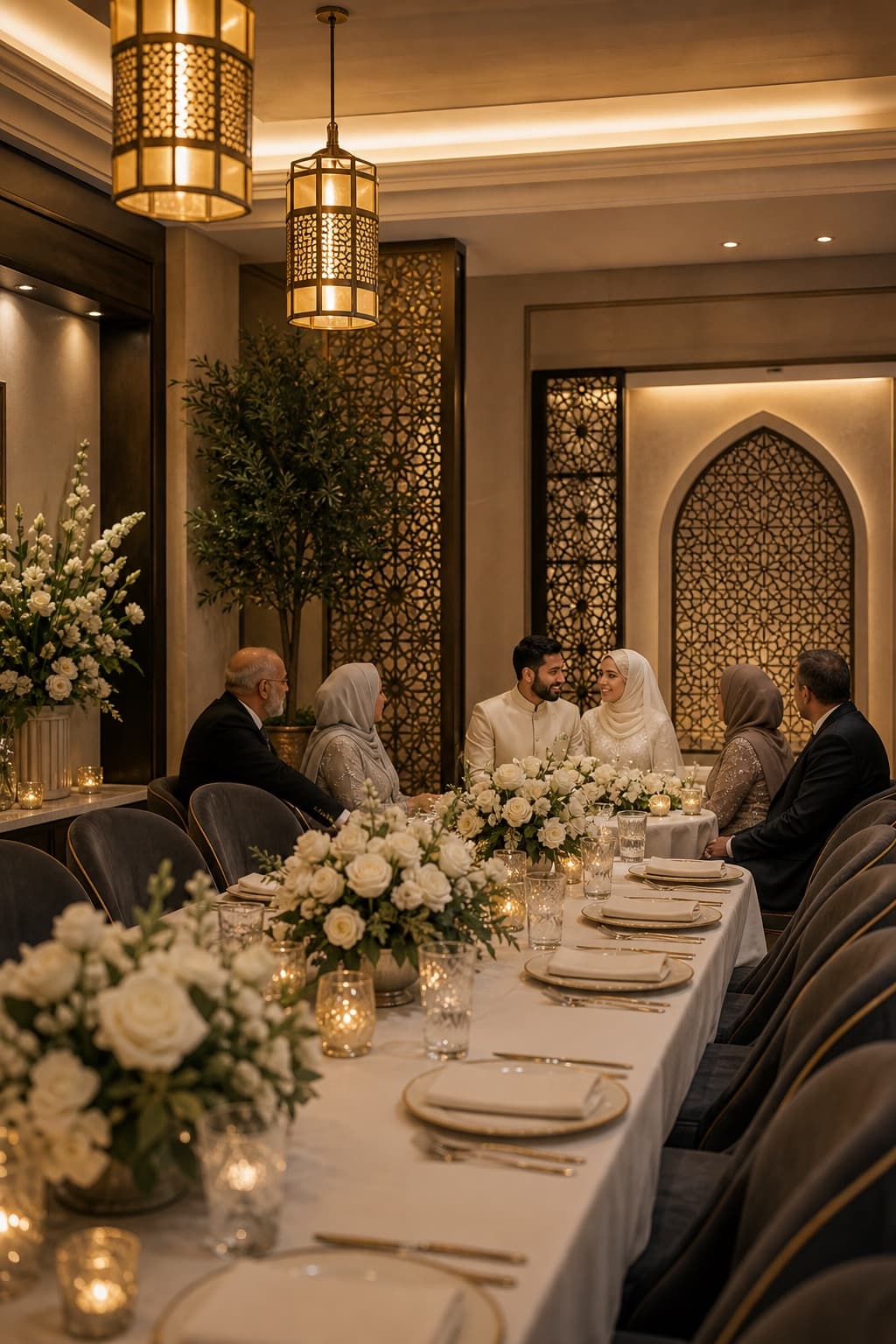
Walima Planning Checklist for UK Muslim Couples
A practical walima planning checklist for UK Muslim couples, covering guests, budget, venues, halal catering, privacy, suppliers and the running order.
Muslim Wedding Gifts: What to Give at a Nikah or Walima
Practical gift ideas for UK Muslim weddings, with guidance on cash, personalisation and receiving presents across a nikah and walima.