Nikah vs Walima: What Is the Difference?
The nikah is the Islamic marriage contract; the walima is the meal and celebration held after the marriage. Compare their purpose, timing, hosts and planning needs.
Words by Ilyas Amar
12 July 2026
5 minute read
Updated 21 October 2026
Sources, estimates and corrections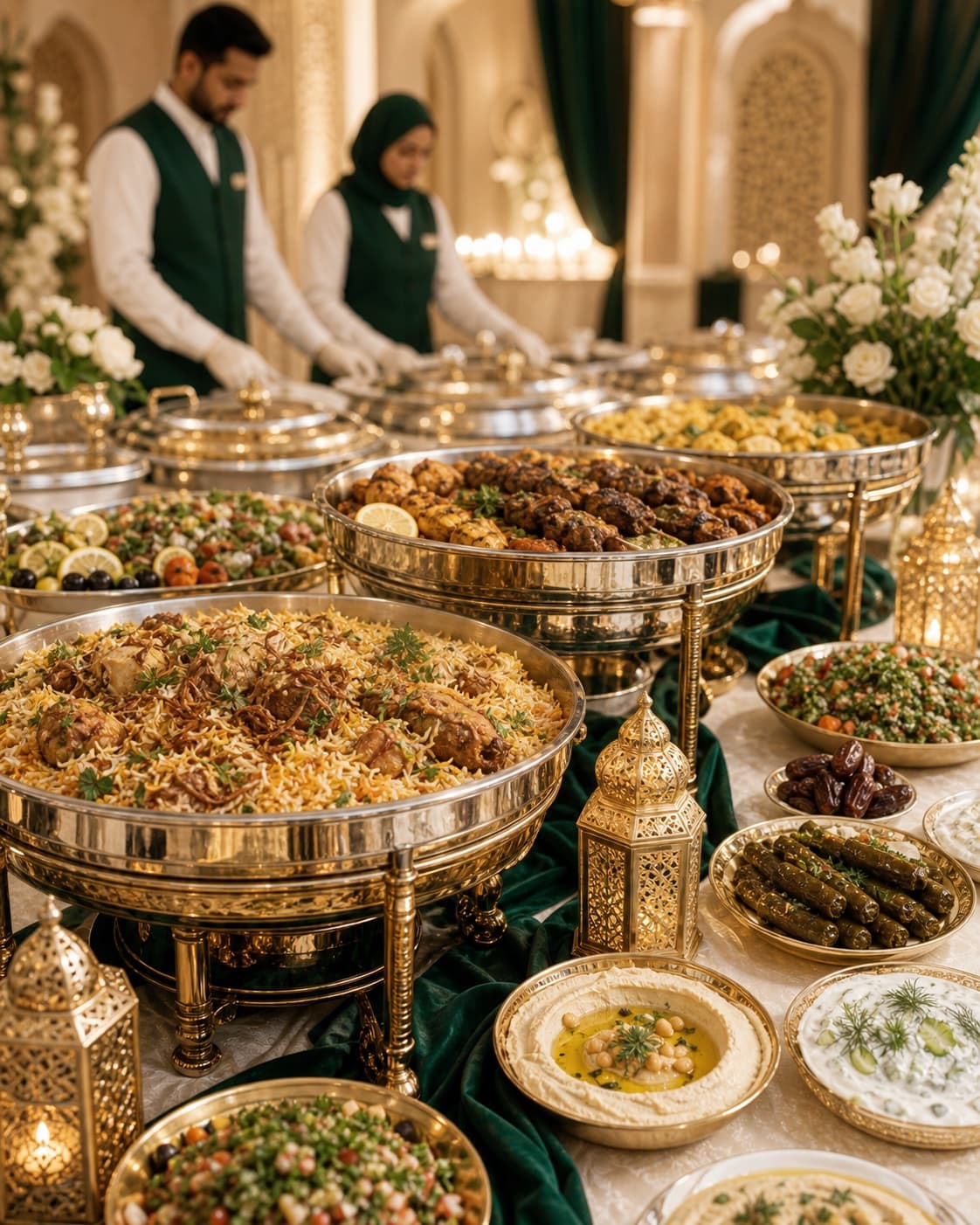
The nikah and walima are different parts of a Muslim wedding. The nikah is the marriage contract that makes the couple married in Islam. The walima is the celebratory meal held after the marriage, traditionally hosted by the groom. A couple may hold both on one day, but they serve different purposes.
How do the nikah and walima compare?
The nikah is the Islamic marriage contract and the walima is the wedding feast that follows it. They differ in purpose, timing, hosts and length. The nikah is brief and forms the marriage, while the walima is a meal that celebrates and announces it, from a family dinner to a large reception.
| Nikah | Walima | |
|---|---|---|
| Main purpose | Form the Islamic marriage contract | Celebrate and announce the marriage |
| Religious standing | The essential religious act | Hadith urge a wedding feast; scholars differ on whether it is obligatory |
| Timing | Before the couple begin married life | After the nikah |
| Typical host | Couple or either family | Traditionally the groom |
| Main elements | Consent, mahr, witnesses, contract | Meal, guests and celebration |
| Usual length | Often brief | Usually several hours |
| Venue | Mosque, home or hired venue | Home, restaurant or hired venue |
| Legal effect in the UK | A legal marriage only if the civil requirements are also met | None on its own |
What is a nikah?
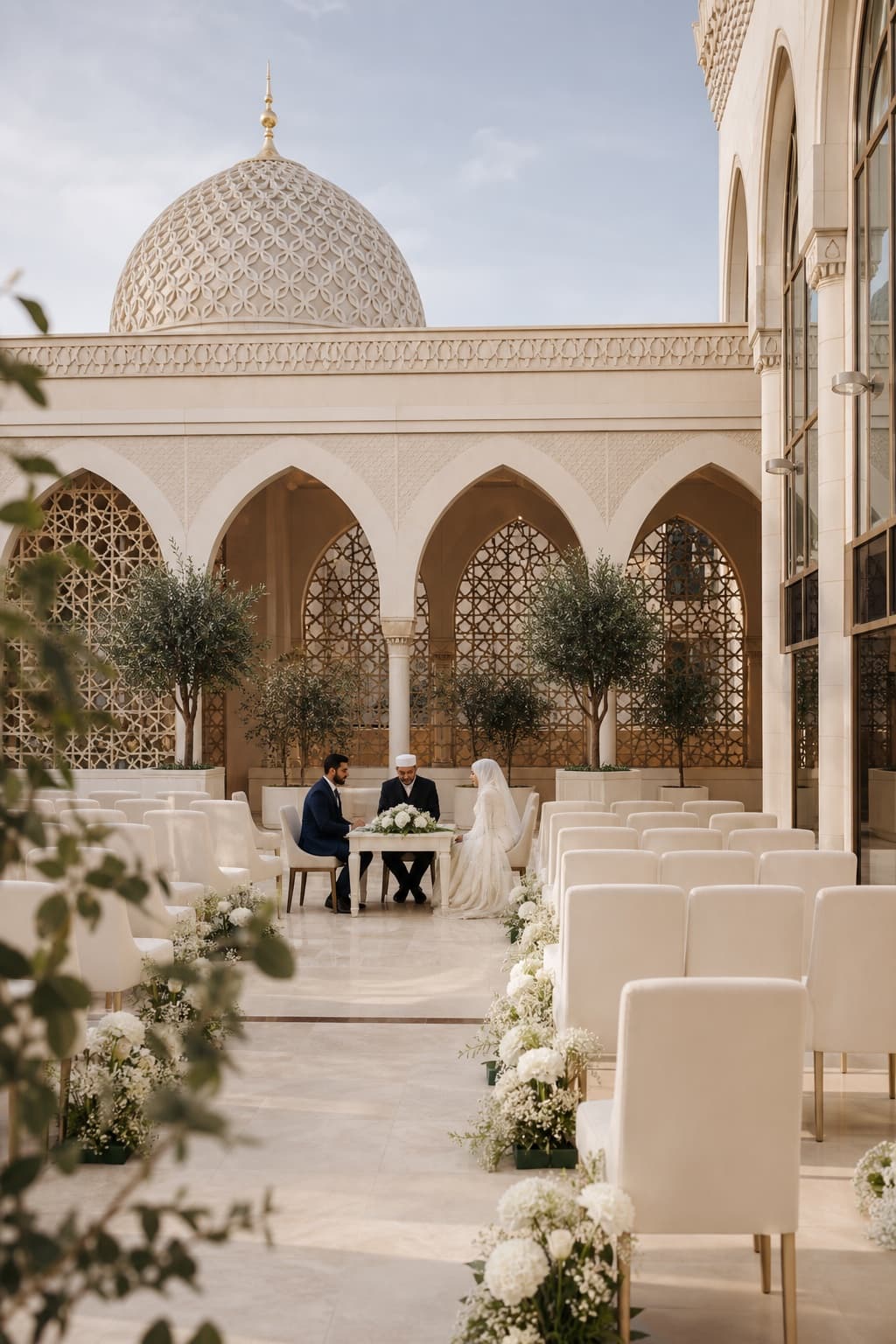
The nikah is the Islamic marriage contract. It centres on the couple's free consent, the agreed mahr and witnesses, with an imam or scholar commonly guiding the ceremony. The nikah is the point at which the couple become married in Islam. It is not simply an engagement or a reception.
The ceremony can be brief and can take place at a mosque, home or venue. Read the full guide to the nikah for the ceremony requirements and UK legal-registration considerations, and What is mahr? for the marriage gift agreed as part of it.
What is a walima?
The walima is the marriage feast held after the nikah to announce and celebrate the marriage with family, friends and community. Traditionally the groom hosts it, although modern couples and families often share the organisation and cost. It can be an intimate meal at home or a large reception.
The Prophet ﷺ told Abdur-Rahman ibn Awf to hold a wedding feast even if only with a sheep, as recorded in Sahih al-Bukhari 5167 and Sahih Muslim 1427a, so the purpose of a walima does not depend on extravagance. Read What is a walima? for the religious background and a practical planning checklist.
Is the walima compulsory?
Scholars differ. Many describe the walima as a strongly recommended sunnah and some regard it as obligatory, while the nikah is the act that forms the marriage. Its size and format can be modest. Ask your imam which view your family follows, and agree the plan with both families before you book.
Hadith in Sahih al-Bukhari 5177 and Sahih Muslim 1432a criticise a wedding feast to which only the rich are invited while the poor are left out, and urge guests to accept an invitation. Many couples take that as a reason to think carefully about who is on their guest list.
Can the nikah and walima happen on the same day?
Yes. Many UK couples hold the nikah first and follow it with the walima meal in the same venue. Others keep the nikah small and hold the walima on another day. Confirm the order with your imam and allow enough time between the contract, photographs, prayer and meal service.
Is either event a legal marriage in the UK?
A nikah is a legal marriage in England and Wales only if the civil requirements are met, usually a registered religious building with an authorised person or a registrar present, after notice is given. The walima has no legal effect. Scotland and Northern Ireland have their own rules.
GOV.UK says a religious wedding can take place at any registered religious building, and that an authorised person, such as a religious minister, must attend and sign the marriage document. If the venue has none, you must book a registrar. Read Is a nikah legally recognised in the UK? for the full explanation across all four nations.
Who hosts and pays for the walima?
Traditionally the groom's family hosts and funds the walima, although families may agree a different arrangement or share the cost. Agree who hosts, who pays and who invites whom before you book vendors, so that the venue, caterer and guest list are not decided twice by two households.
Which event needs a venue and catering?
Either event can use a hired venue, but the walima normally creates the larger catering requirement. Before booking, confirm guest capacity, halal food arrangements, prayer space, accessibility, parking and whether the room can support your preferred seating layout. Ask for written quotes for both events.
Browse Muslim wedding venues and halal caterers, then keep both events aligned in the free Wedding Checklist and Budget Planner.
If you are now organising the reception, the walima planning checklist brings the guest list, vendor questions and final checks into one plan.
Which sources does this guide use?
This guide uses the hadith collections of Sahih al-Bukhari and Sahih Muslim for the religious background and GOV.UK for the legal position in England and Wales. Where scholars differ, we say so and do not issue rulings. Check details with your imam and register office. We opened every source below on 21 October 2026.
- Sahih al-Bukhari 5167 and Sahih Muslim 1427a for the instruction to hold a wedding feast, even with a sheep.
- Sahih al-Bukhari 5177 and Sahih Muslim 1432a for accepting the invitation and not inviting only the rich.
- GOV.UK: Plan your ceremony for registered religious buildings, authorised persons and registrars.
The practical edit
Frequently asked questions
Is the nikah the same as the walima?
No. The nikah is the Islamic marriage contract. The walima is the feast that celebrates the marriage after the contract.
Which comes first, nikah or walima?
The nikah comes first. The walima follows the marriage, whether later the same day or on a later date agreed by the couple and families.
Do you need both a nikah and walima?
The nikah is the marriage contract. The walima is strongly encouraged in Islamic tradition, but its size and format can be modest. Ask your imam about the view you follow.
Who pays for the walima?
Traditionally the groom hosts the walima. Families may agree a different arrangement, so confirm responsibilities and budgets before booking vendors.
Can guests be invited to the walima but not the nikah?
Yes. Many couples keep the nikah small and invite a wider group to the walima. Say clearly which event each invitation covers. Our guide to Muslim wedding invitation wording has templates for both.
The letter from the editor
Wedding planning tips, straight to your inbox
Nikah checklists, budget advice and practical ideas, about twice a month. No spam.
Continue the edition
Related reading
Ummi Chowdhury: Bridal Artistry with an Editorial Eye
Meet Ummi Chowdhury, the London and Essex bridal hair and makeup artist with a London Runway editorial credit, a dedicated travelling team and bookings available across the UK and internationally.
PlanMyNikah vs Hitched for Muslim Weddings
A dated, fair comparison of PlanMyNikah and Hitched for UK Muslim couples: vendor directory scale, free planning tools, faith-specific details and which suits whom.
Questions to Ask a Muslim Wedding Venue Before Booking
Take this checklist to every venue viewing: halal catering, prayer space, segregation layouts, capacity, hidden costs, access, timings and contract terms.