How AI can help plan a Muslim wedding (and where it cannot)
A practical guide to using AI for Muslim wedding planning: useful questions, grounded next steps, human confirmation and the decisions AI should never make.
Words by PlanMyNikah Team
11 June 2026
4 minute read
Updated 29 July 2026
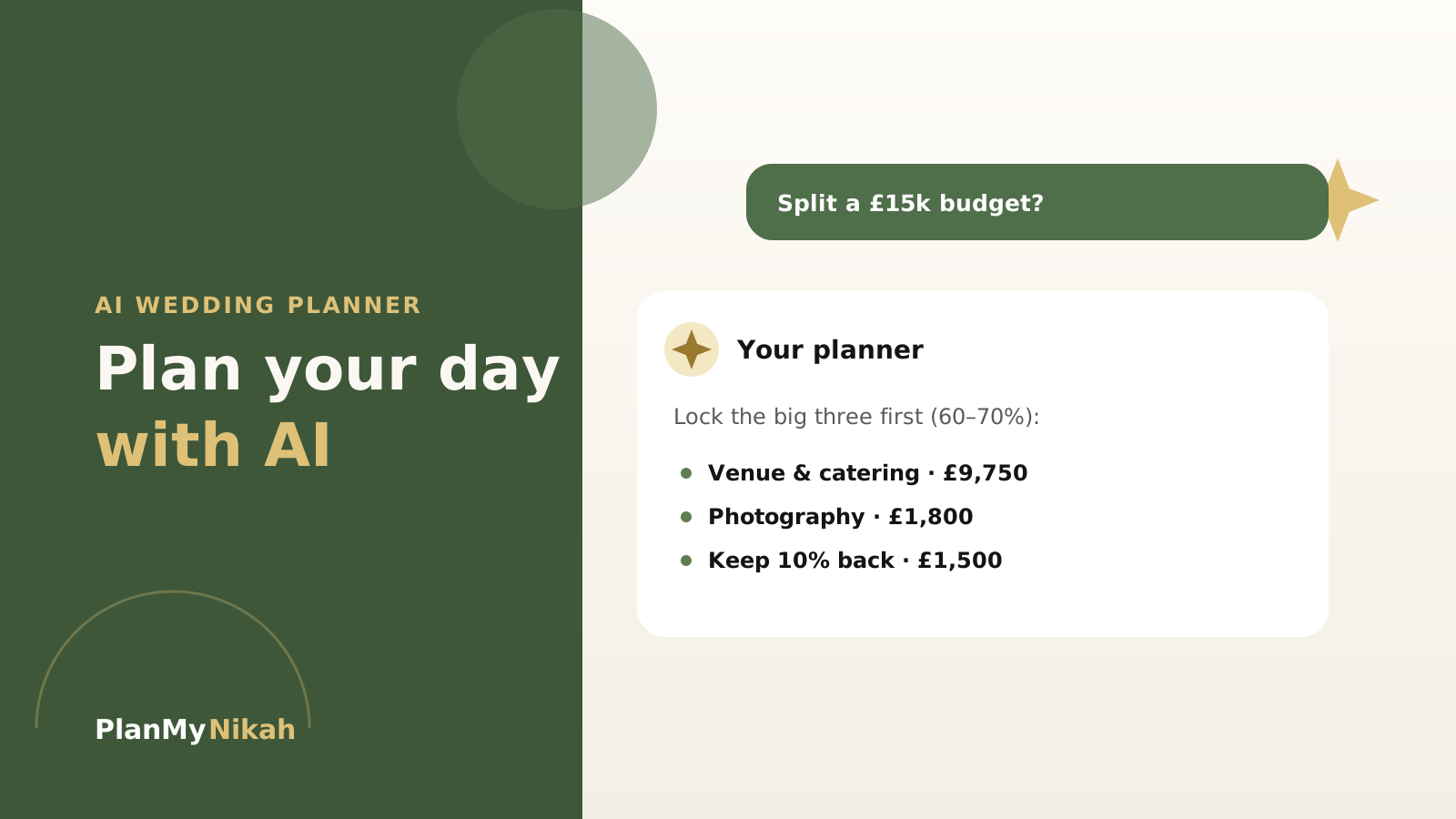
AI is most useful in wedding planning when it reduces a messy question to something you can review. It can help organise a nikah and walima, explain a trade-off or draft a sensible starting point. It should not become the person who chooses a vendor, sends a message or decides what your family believes.
Hilal is PlanMyNikah's AI-assisted Muslim wedding planner. It sits beside the marketplace and planning tools, so the aim is not to produce impressive-sounding paragraphs. The aim is to help you reach a clear, human-owned next step.
Use AI to structure an unclear problem
Wedding questions often arrive as a bundle: the date may affect the venue, the guest count affects catering, and both affect the budget. A useful assistant can separate those threads and show which decision should come first.
Good starting prompts include:
- "We have a nikah and walima on different days. What should we decide first?"
- "Help me turn a £25,000 working budget into categories I can review."
- "What details are missing before I ask photographers for quotes?"
- "Give me three practical priorities for this month, based on this plan."
The answer is a draft. Move the agreed figures into the Budget Planner, tasks into the Wedding Checklist, and vendor criteria into a real supplier search.
Prefer deterministic tools for facts and calculations
AI is not the right tool for every job. Totals, due dates, allowances and calendar conversions should come from deterministic software or stored account data, not a model guessing from prose.
PlanMyNikah keeps those roles separate. Date fields can flag deterministic Ramadan and Eid planning windows with a civil-Hijri caveat, while Hilal explains why a family or vendor may want to check the date. Local moon-sighting guidance remains authoritative. Budget and checklist changes remain proposals until a person confirms them.
Important
If an answer contains a date, price, availability claim or religious conclusion that is not supported by the visible source, treat it as unresolved and check it independently.
Ground suggestions in the workflow you opened
A generic chatbot knows only what you type. A product assistant can be more useful when the signed-in workflow supplies a small, authorised snapshot: the checklist items already completed, the budget categories already set, or the vendor conversation that is currently open.
That context still needs boundaries. On an enabled vendor inbox surface, Hilal can summarise the authorised thread and pipeline snapshot and prepare an editable reply. It cannot send the reply, promise a date or contact the couple by itself. Couple-facing proposals follow the same rule: prepare and explain first, then wait for confirmation.
Use culturally aware context without asking AI for a ruling
Muslim weddings are not one template. A useful planner can recognise words such as nikah, walima, mehndi and barat, make room for family involvement, and prompt practical questions about privacy, prayer space, halal evidence or segregation where relevant.
It must also know where to stop. Religious rulings belong with a trusted scholar. Legal and financial decisions belong with qualified professionals. Hilal can help you prepare the question and organise the answer you receive; it should not pretend to replace that expertise.
Family-board invitations and core controls can be used in English, Urdu, Bengali and Arabic. User-written tasks and messages remain the family's own words unless someone explicitly requests a reviewed translation preview.
Keep voice and text reviewable
On eligible accounts and supported browsers, Voice-to-Plan can turn a spoken planning note into a transcript and proposed next step. Review the transcript before confirming anything. Typing remains available when recording is unsupported or simply not your preference, and the audio and transcript content are not retained after the response.
Know the safety checks before you start
Before using any AI wedding planner, ask five questions:
- Which account or marketplace facts can this surface access?
- Does it show the source or basis for important suggestions?
- Can I edit the result before anything changes?
- Is there a manual route if AI is unavailable or the allowance is exhausted?
- How do I report an answer that looks wrong?
The Meet Hilal page answers those questions for PlanMyNikah and includes a static demonstration that reads no account data.
For a concrete workflow, continue with the Muslim wedding checklist, the nikah budget guide or the guide to choosing your next planning step.
The practical edit
Frequently asked questions
Can AI plan my whole Muslim wedding for me?
It can help structure questions, explain options and prepare drafts, but it should not own the plan. You and the people you trust confirm the facts, spending, communication and bookings.
Is Hilal the same as a general chatbot?
No. Hilal is connected to specific PlanMyNikah workflows. Eligible signed-in surfaces can provide authorised planning or marketplace context, while the public demonstration remains synthetic and reads no account data.
Can Hilal give religious advice?
No. Hilal can explain practical planning considerations and help you prepare questions, but religious rulings should be confirmed with a trusted scholar.
What happens if Hilal is unavailable?
The normal checklist, budget, search, inbox and form remain available. An AI error or exhausted allowance must not replace valid account data or remove the manual path.
The letter from the editor
Wedding planning tips, straight to your inbox
Nikah checklists, budget advice and practical ideas, about twice a month. No spam.
Continue the edition
Related reading
Muslim Wedding Photography Shot List: Nikah, Mehndi and Walima
Plan the photographs that matter at your nikah, mehndi, baraat and walima. This practical UK guide covers family groups, privacy, ceremony moments and the final photographer brief.
Walima Planning Checklist for UK Muslim Couples
A practical walima planning checklist for UK Muslim couples, covering guests, budget, venues, halal catering, privacy, suppliers and the running order.
Muslim Wedding Gifts: What to Give at a Nikah or Walima
Practical gift ideas for UK Muslim weddings, with guidance on cash, personalisation and receiving presents across a nikah and walima.